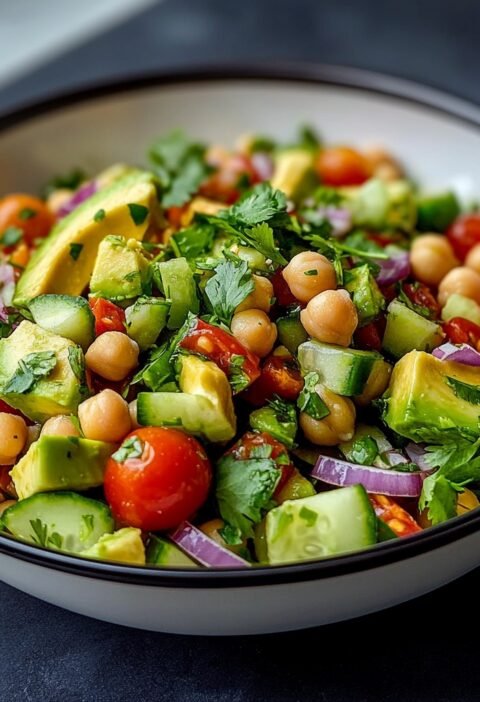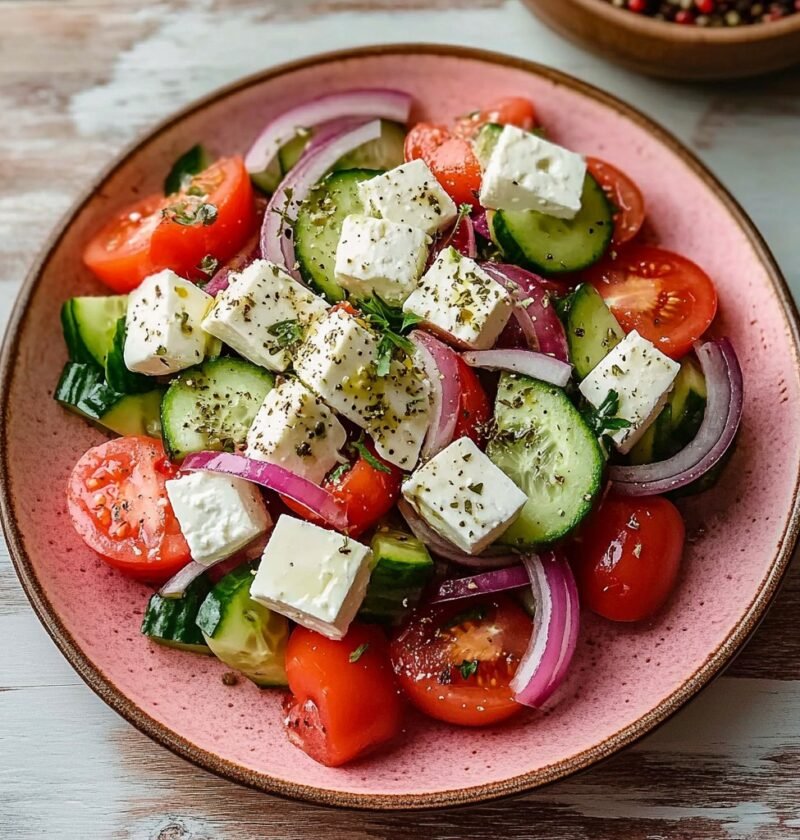
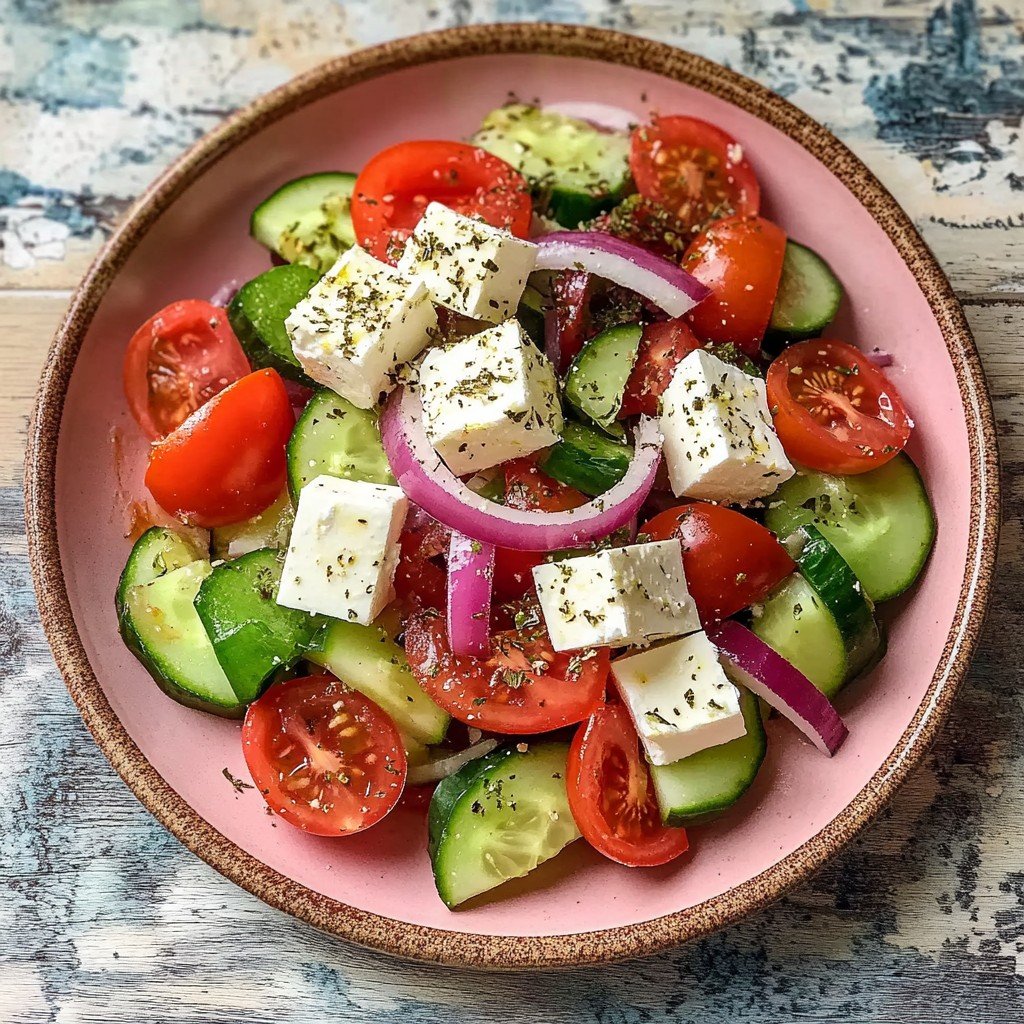
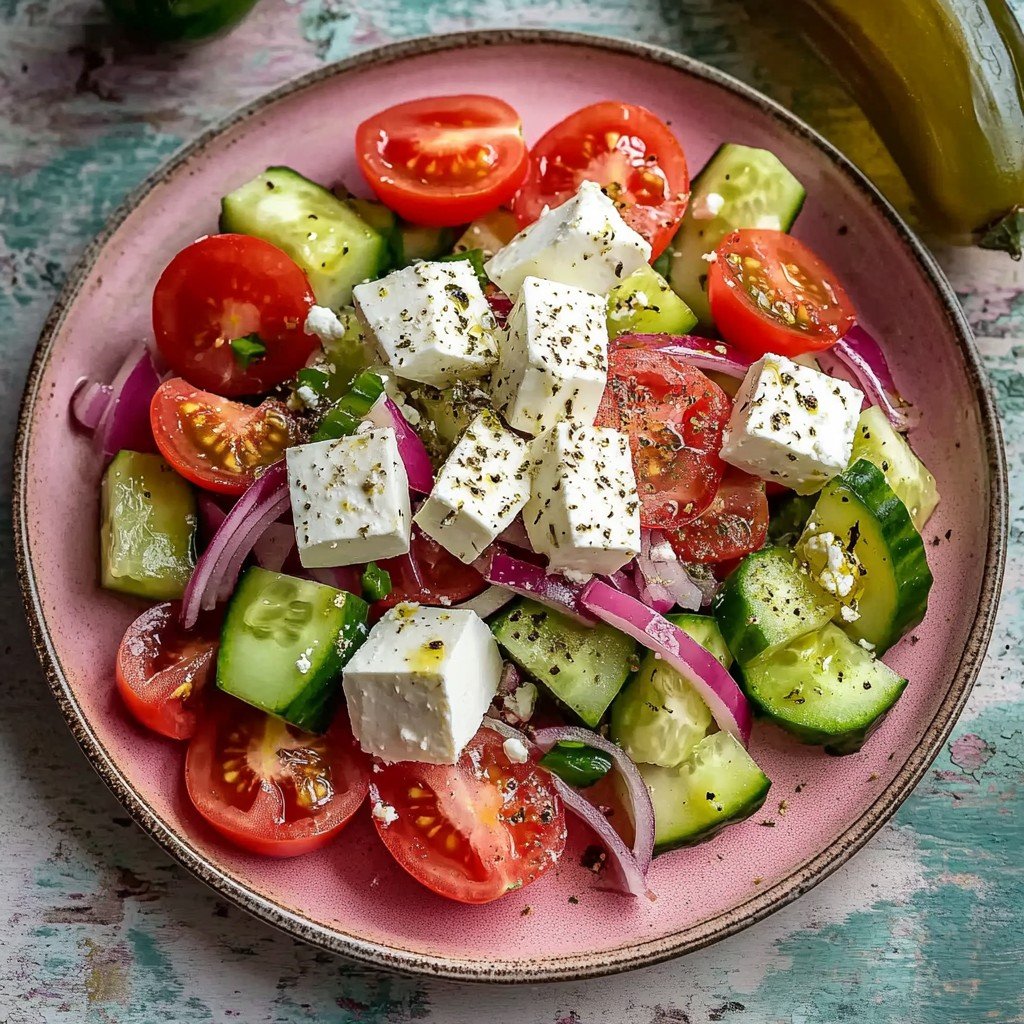
Gluten-Free Horiatiki Greek Salad, also known as village salad, is a beloved staple of Greek cuisine and embodies the essence of the Mediterranean diet. With fresh tomatoes, crisp cucumbers, ripe olives, tangy red onions, bell peppers, and creamy feta cheese, this gluten-free salad celebrates the bounty of the region.
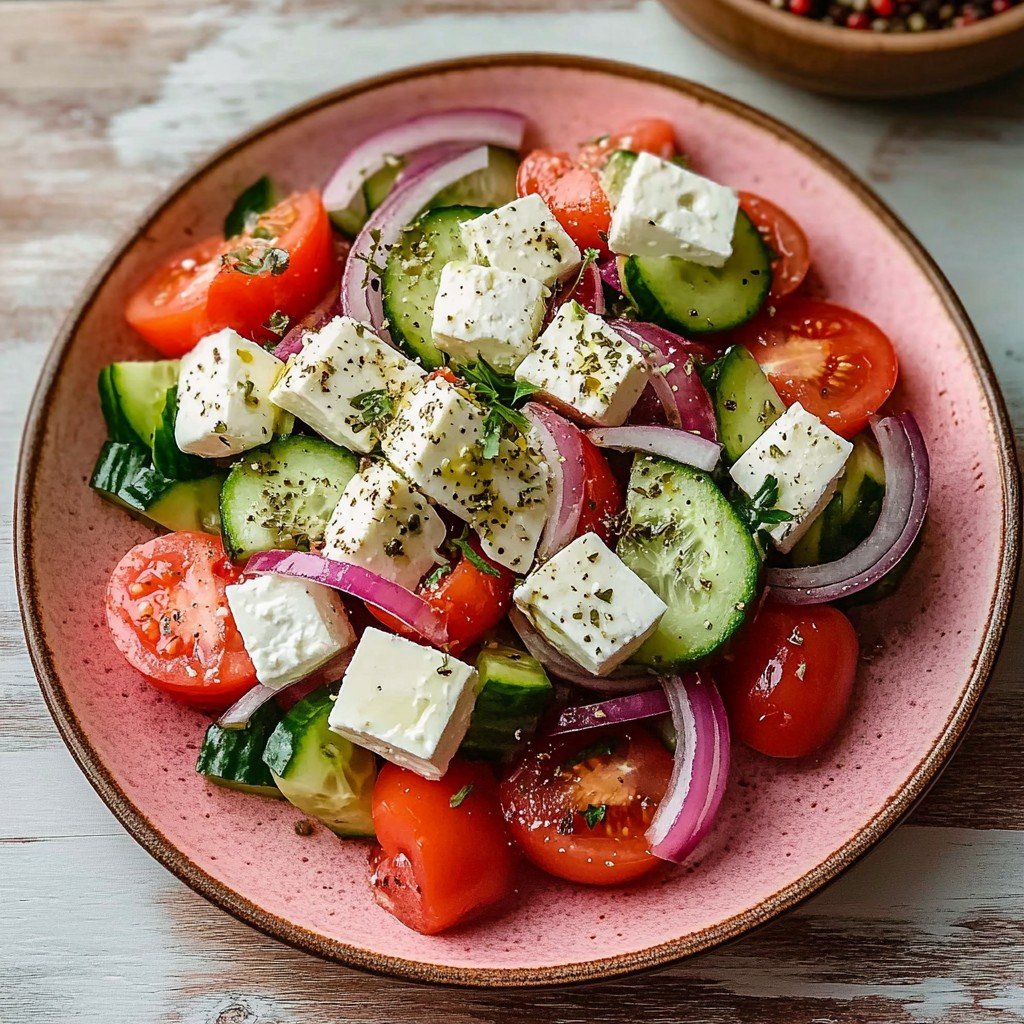
The Horiatiki salad has been enjoyed in Greek villages for generations, typically served as a starter or a light meal during warm summer months.
What sets this dish apart is its simplicity – there are no leafy greens, noodles, or gluten-based croutons, making it naturally gluten free and suitable for various dietary needs.
The term 'Horiatiki' translates to 'rustic' or 'village style,' reflecting its humble yet vibrant ingredients directly sourced from local markets and gardens.
This fresh and healthy salad is seasoned with aromatic dried oregano and a generous drizzle of extra virgin olive oil, occasionally enhanced by a hint of red wine vinegar or lemon juice.
Modern adaptations, like this gluten-free version, ensure the salad fits seamlessly into gluten-free and health-conscious lifestyles without sacrificing flavor or tradition.
When you prepare Gluten-Free Horiatiki Greek Salad at home, you are not only making a quick and nutritious meal but also indulging in the sunny flavors of the Aegean, celebrating whole foods, and reviving a timeless culinary classic.
Whether you’re new to the world of wholesome gluten-free dishes or a seasoned foodie looking to add more Mediterranean flair to your table, this recipe guides you to authentic taste, delightful texture, and vibrant nutrition in every bite.
Ingredients
- 3 medium ripe tomatoes, cut into large chunks
- 1 large cucumber, peeled if desired and cut into half-moons
- 1 small red onion, thinly sliced
- 1 green bell pepper, seeded and thinly sliced
- 1/2 cup Kalamata olives, pitted
- 200g (about 7 oz) gluten-free feta cheese, cut into slabs or large cubes
- 1/4 cup extra virgin olive oil
- 1 tablespoon red wine vinegar or freshly squeezed lemon juice
- 1 teaspoon dried Greek oregano
- Sea salt, to taste
- Freshly ground black pepper, to taste
- Optional: Fresh parsley or mint leaves for garnish
Instructions
- Wash all vegetables thoroughly. Pat them dry to prevent excess moisture in the salad.
- Slice the tomatoes into large, irregular chunks for a rustic look. Cut the cucumber into half-moons, keeping the skin on for extra crunch unless you prefer it peeled.
- Thinly slice the red onion and green bell pepper. If the onion flavor is too strong for your liking, soak the slices in cold water for 10 minutes, then drain and pat dry.
- Combine the tomatoes, cucumber, red onion, bell pepper, and Kalamata olives in a large mixing bowl. Gently toss to mix the ingredients evenly.
- Add the feta cheese on top in either large cubes or slabs, as is traditional. Avoid crumbling unless preferred.
- Drizzle the extra virgin olive oil and red wine vinegar or lemon juice evenly over the salad.
- Sprinkle the dried oregano, sea salt, and freshly ground black pepper according to taste preferences.
- Carefully toss the salad one more time to distribute the dressing, being gentle to avoid breaking up the feta too much.
- Transfer the salad to a serving platter or bowl. Garnish with extra oregano or fresh parsley/mint leaves if desired.
- Serve immediately, or let the salad sit for 10–15 minutes at room temperature to allow flavors to meld. Enjoy!
Nutritional Information
The Gluten-Free Horiatiki Greek Salad is not only bursting with Mediterranean flavor but is also a remarkable source of essential nutrients and health-promoting compounds.
Each serving, typically based on a generous salad plate, contains approximately 220-270 calories, though this may vary with portion sizes and the amount of olive oil and feta used.
The base of ripe tomatoes and crisp cucumbers provides vitamins A and C, potassium, and natural antioxidants like lycopene, which support immune function and skin health. The red onions and bell peppers contribute additional vitamin C, dietary fiber, and phytonutrients like quercetin that support heart health.
Kalamata olives are a healthy fat source and rich in vitamin E and polyphenols. The star ingredient, feta cheese, delivers a healthy dose of calcium, protein, and probiotics, while being lower in fat than many other cheeses.
Extra virgin olive oil, the backbone of the salad’s dressing, boosts monounsaturated fats, anti-inflammatory compounds, and vitamin E. The entire salad is naturally gluten-free, making it suitable for those with celiac disease or gluten sensitivity.
It is also vegetarian and lower in carbohydrates than many other salads, with about 6-8 grams of net carbs per serving, making it a satisfying choice for low-carb lifestyles. Additionally, the high fiber content from the vegetables assists in digestion and maintaining balanced blood sugar levels.
With abundant nutrients and a moderate calorie count, this Greek salad can help support weight management, cardiovascular health, strong bones, and overall well-being.
Wine and Beverage Pairings
Horiatiki Greek Salad’s bright, tangy, and savory flavors pair beautifully with a variety of beverages. For a truly authentic experience, enjoy your Gluten-Free Horiatiki Greek Salad alongside a chilled glass of crisp Assyrtiko, a dry white wine from Greece that boasts vibrant citrus notes.
Alternatively, a Sauvignon Blanc or Pinot Grigio complements the acidity of the salad and the creaminess of the feta. For those preferring non-alcoholic options, sparkling water infused with lemon, cucumber, or fresh mint is both refreshing and palate-cleansing.
Herbal iced teas, such as mint or chamomile, also offer a Mediterranean touch and can be lightly sweetened with honey if desired. For a unique twist, try serving your salad with a Greek iced coffee (frappé) during a leisurely lunch outdoors.
Cooking Tips and Variations
To create the tastiest Gluten-Free Horiatiki Greek Salad, always use the freshest, highest-quality ingredients available. Opt for ripe, locally grown tomatoes and crisp cucumbers for optimal flavor and texture.
When selecting feta cheese, authentic Greek feta made from sheep’s milk, or a combination of sheep and goat’s milk, will provide the creamiest and most flavorful result.
Allow the cheese to be served in sizeable cubes or slabs rather than crumbled – this is traditional and also helps preserve its texture. If you prefer a milder flavor from red onions, soak the slices in cold water for a few minutes before adding them to the salad.
For an extra punch of Mediterranean aroma, lightly crush the dried oregano between your fingers before sprinkling it over the vegetables. You can customize the salad further by adding sliced radishes, capers, or even a small handful of fresh herbs like dill, mint, or basil.
For those who enjoy a tangier note, increase the portion of red wine vinegar or mix in a little lemon zest. Make your salad meal-worthy by serving it with a side of gluten-free bread or grilled chicken.
Keep in mind that Horiatiki salad is best enjoyed immediately for maximum freshness, but can be stored, without the feta, for up to a day in the refrigerator. When ready to serve leftovers, simply add the cheese and give it a fresh drizzle of olive oil.
Serving Suggestions
The Gluten-Free Horiatiki Greek Salad is an exceptionally versatile dish, making it ideal for family gatherings, picnics, barbecues, or as a vibrant addition to weekday meals.
Serve it as a main course for a light lunch by pairing it with gluten-free pita or rustic bread, or as a substantial dinner salad topped with grilled shrimp, chicken, or chickpeas for extra protein.
For multi-course meals, present it as a zesty starter or a fresh accompaniment alongside grilled meats, fish, or plant-based entrees. If entertaining, arrange the vegetables and feta artistically on a platter and garnish with extra olives and fresh herbs to impress your guests.
Horiatiki salad is deliciously suited for outdoor dining and can be made ahead of time by preparing the vegetables and dressing separately; simply combine everything right before serving for best results. When packing for picnics or work lunches, keep the feta and dressing separate to maintain texture and freshness.
To add a unique touch to your presentation, sprinkle pomegranate seeds or toasted pine nuts over the top for a sweet-savory balance. Whether enjoyed on a warm summer day or as a year-round staple, this salad brings vibrant color, flavor, and healthfulness to any table.
Health Benefits
Gluten-Free Horiatiki Greek Salad is a nutritional powerhouse, perfectly aligned with heart-healthy Mediterranean dietary patterns. Its abundance of raw vegetables delivers antioxidants that combat inflammation and protect against chronic diseases.
The tomatoes and bell peppers are excellent sources of vitamins C and A, which boost the immune system and maintain healthy skin and vision. Cucumbers provide hydration and digestive-friendly fiber, while red onions contribute prebiotics that support gut health.
The use of Kalamata olives and extra virgin olive oil ensures a generous dose of monounsaturated fats, fostering cardiovascular benefits such as reduced LDL cholesterol and improved arterial function. Feta cheese, particularly from sheep and goat’s milk, supplies calcium, protein, and beneficial probiotics for bone health and digestive support.
This salad is also low in carbohydrates and free from gluten, making it suitable for people with celiac disease, gluten intolerance, or those pursuing low-carb or diabetic-friendly diets.
In addition, the natural presence of phytonutrients such as polyphenols, lycopene, and flavonoids in the salad’s core ingredients has been linked to lower rates of metabolic syndrome. Regularly including this salad in your diet promotes satiety, aids weight management, and supplies vital micronutrients without excess calories or processed ingredients.
Frequently Asked Questions
Traditional Horiatiki Greek Salad includes feta cheese, which is not vegan. You can make it vegan by substituting the feta with a plant-based cheese alternative or omitting it entirely.
Yes, you can prepare the vegetables and dressing in advance. For the best texture, combine the salad just before serving and add the feta at the last moment.
The salad can be stored for up to 24 hours if the feta and dressing are kept separate. Once combined, it is best enjoyed within a few hours for optimal freshness.
While traditional Horiatiki avoids leafy greens, you may add sliced radishes, capers, or cherry tomatoes for variety, keeping the authenticity and gluten-free aspect intact.
Absolutely. With minimal carbohydrates and no added sugars, Gluten-Free Horiatiki Greek Salad is well suited for low-carb, diabetic, or balanced diet plans.
Gluten-Free Horiatiki Greek Salad is a classic dish that brings the flavors, colors, and health benefits of the Mediterranean straight to your kitchen. Naturally gluten-free and bursting with fresh produce, this salad is not only visually stunning but also versatile, nutritious, and easy to prepare. Its rustic roots lend simplicity and authenticity, making it a favorite for everyday meals and special occasions alike. By following this recipe, you can create an unforgettable salad that delights the palate and supports a healthy lifestyle. Whether enjoyed as a light meal, a side, or a vibrant centerpiece at gatherings, Gluten-Free Horiatiki Greek Salad will quickly become a go-to staple in your culinary repertoire.
Ingredients
- 3 medium ripe tomatoes, cut into large chunks
- 1 large cucumber, peeled if desired and cut into half-moons
- 1 small red onion, thinly sliced
- 1 green bell pepper, seeded and thinly sliced
- 1/2 cup Kalamata olives, pitted
- 200g (about 7 oz) gluten-free feta cheese, cut into slabs or large cubes
- 1/4 cup extra virgin olive oil
- 1 tablespoon red wine vinegar or freshly squeezed lemon juice
- 1 teaspoon dried Greek oregano
- Sea salt, to taste
- Freshly ground black pepper, to taste
- Optional: Fresh parsley or mint leaves for garnish
Instructions
-
1Wash all vegetables thoroughly. Pat them dry to prevent excess moisture in the salad.
-
2Slice the tomatoes into large, irregular chunks for a rustic look. Cut the cucumber into half-moons, keeping the skin on for extra crunch unless you prefer it peeled.
-
3Thinly slice the red onion and green bell pepper. If the onion flavor is too strong for your liking, soak the slices in cold water for 10 minutes, then drain and pat dry.
-
4Combine the tomatoes, cucumber, red onion, bell pepper, and Kalamata olives in a large mixing bowl. Gently toss to mix the ingredients evenly.
-
5Add the feta cheese on top in either large cubes or slabs, as is traditional. Avoid crumbling unless preferred.
-
6Drizzle the extra virgin olive oil and red wine vinegar or lemon juice evenly over the salad.
-
7Sprinkle the dried oregano, sea salt, and freshly ground black pepper according to taste preferences.
-
8Carefully toss the salad one more time to distribute the dressing, being gentle to avoid breaking up the feta too much.
-
9Transfer the salad to a serving platter or bowl. Garnish with extra oregano or fresh parsley/mint leaves if desired.
-
10Serve immediately, or let the salad sit for 10–15 minutes at room temperature to allow flavors to meld. Enjoy!
Approximate Information for One Serving
Nutrition Disclaimers
Number of total servings shown is approximate. Actual number of servings will depend on your preferred portion sizes.
Nutritional values shown are general guidelines and reflect information for 1 serving using the ingredients listed, not including any optional ingredients. Actual macros may vary slightly depending on specific brands and types of ingredients used.
To determine the weight of one serving, prepare the recipe as instructed. Weigh the finished recipe, then divide the weight of the finished recipe (not including the weight of the container the food is in) by the desired number of servings. Result will be the weight of one serving.
Did you make this recipe?
Please consider Pinning it!