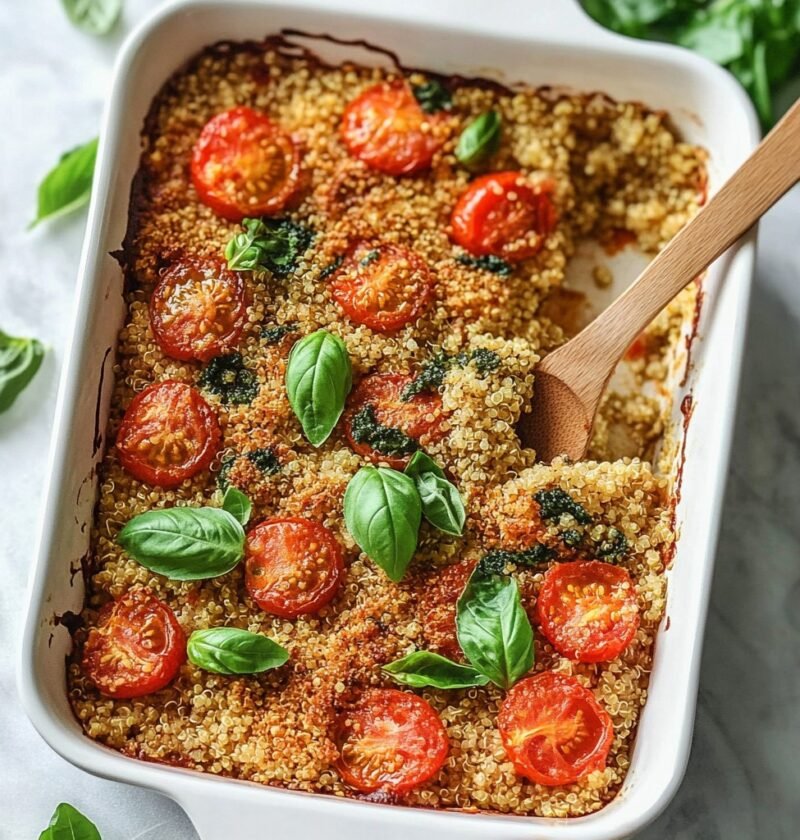
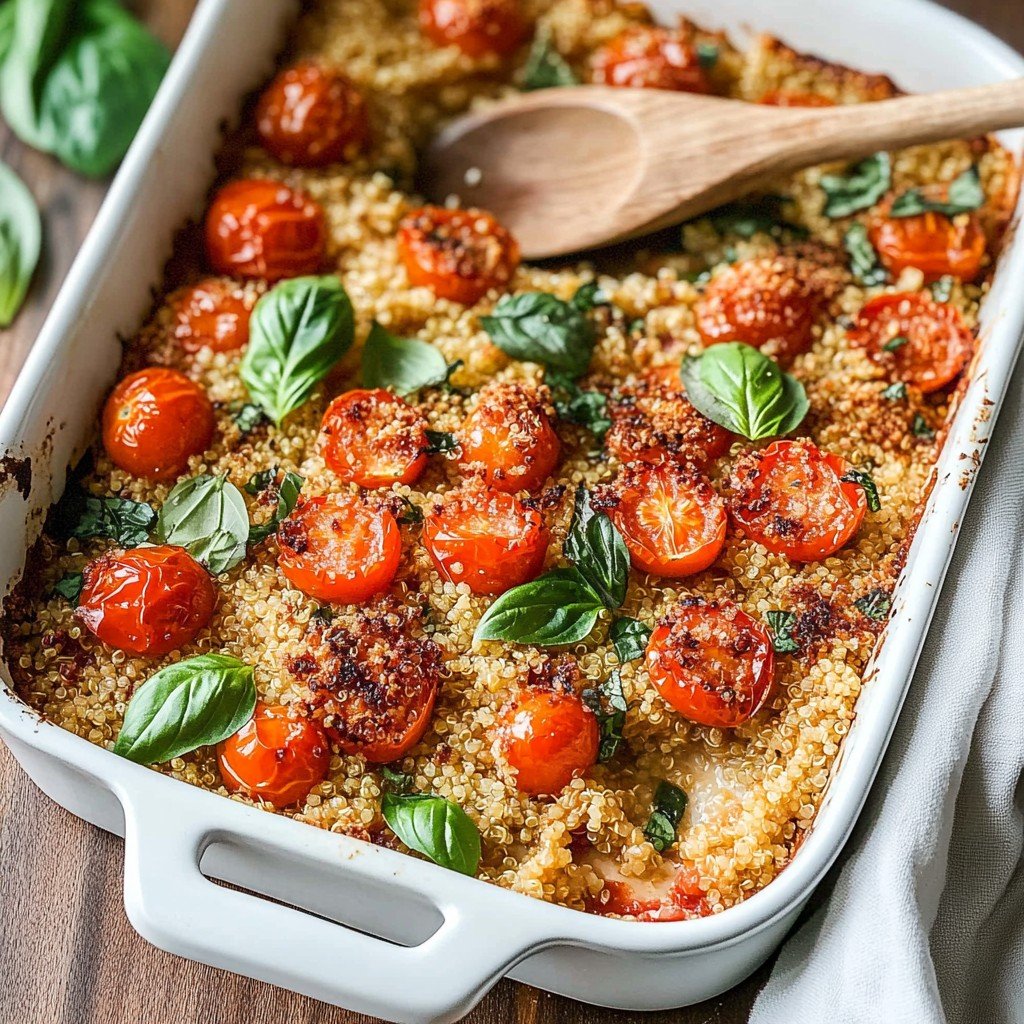
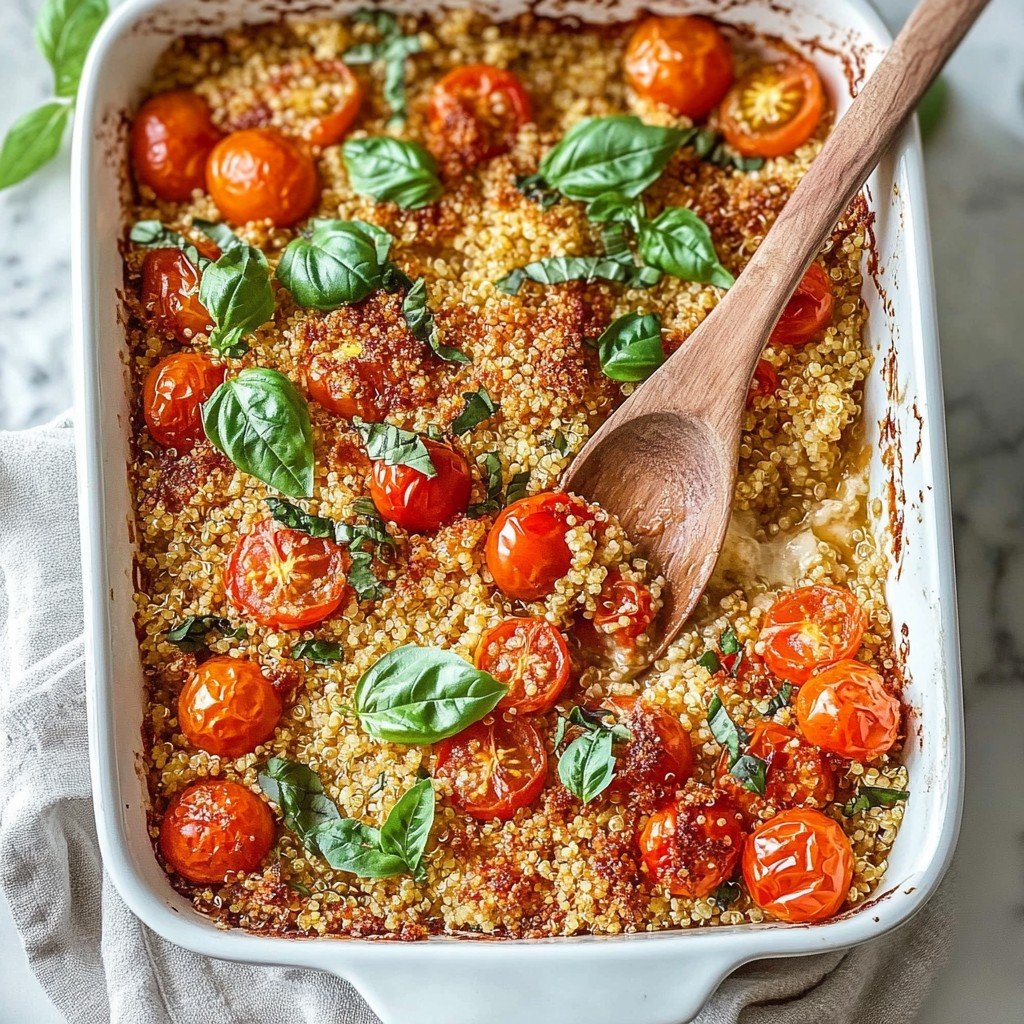
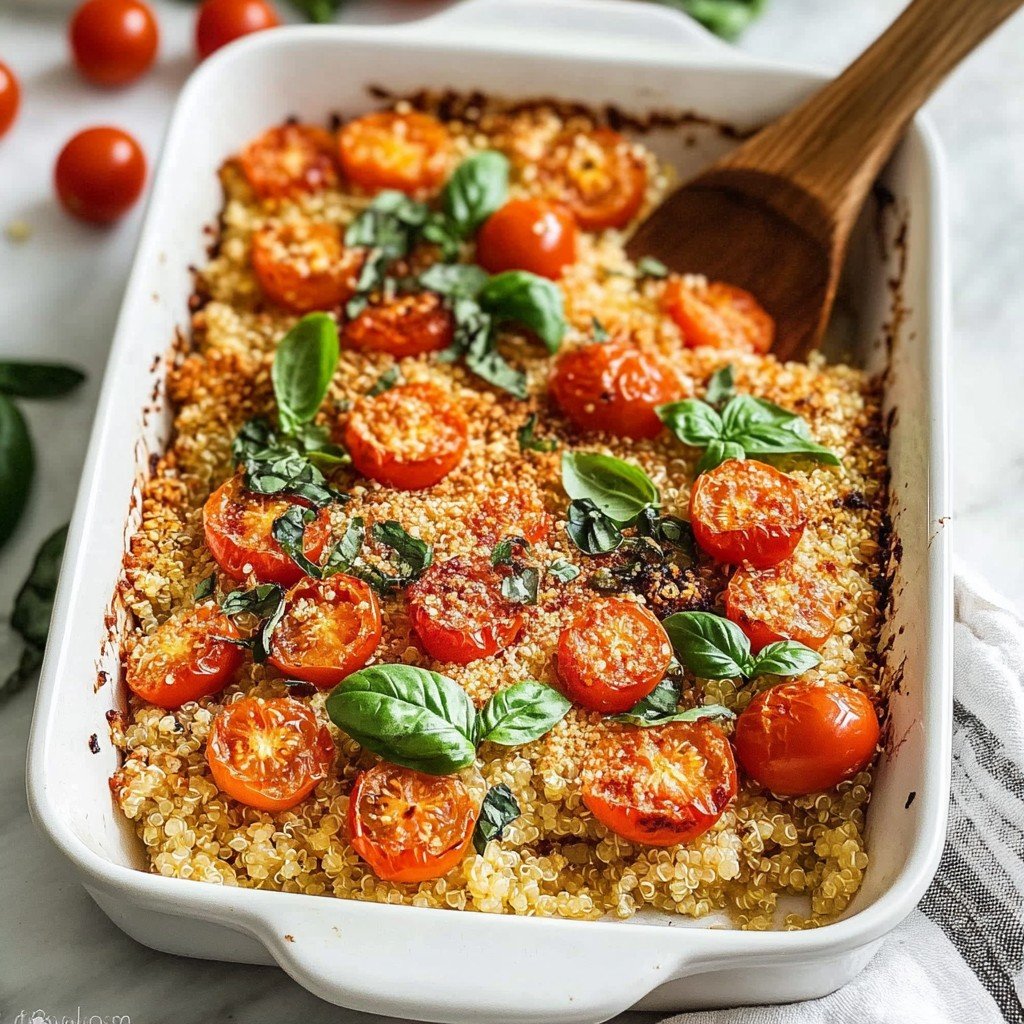
The Mediterranean Quinoa Casserole is a vibrant, wholesome dish that brings together the best of Mediterranean cuisine and the nutritious benefits of quinoa. This recipe is a modern take on traditional Mediterranean casseroles, blending classic ingredients like tomatoes, spinach, feta cheese, olives, and aromatic herbs.
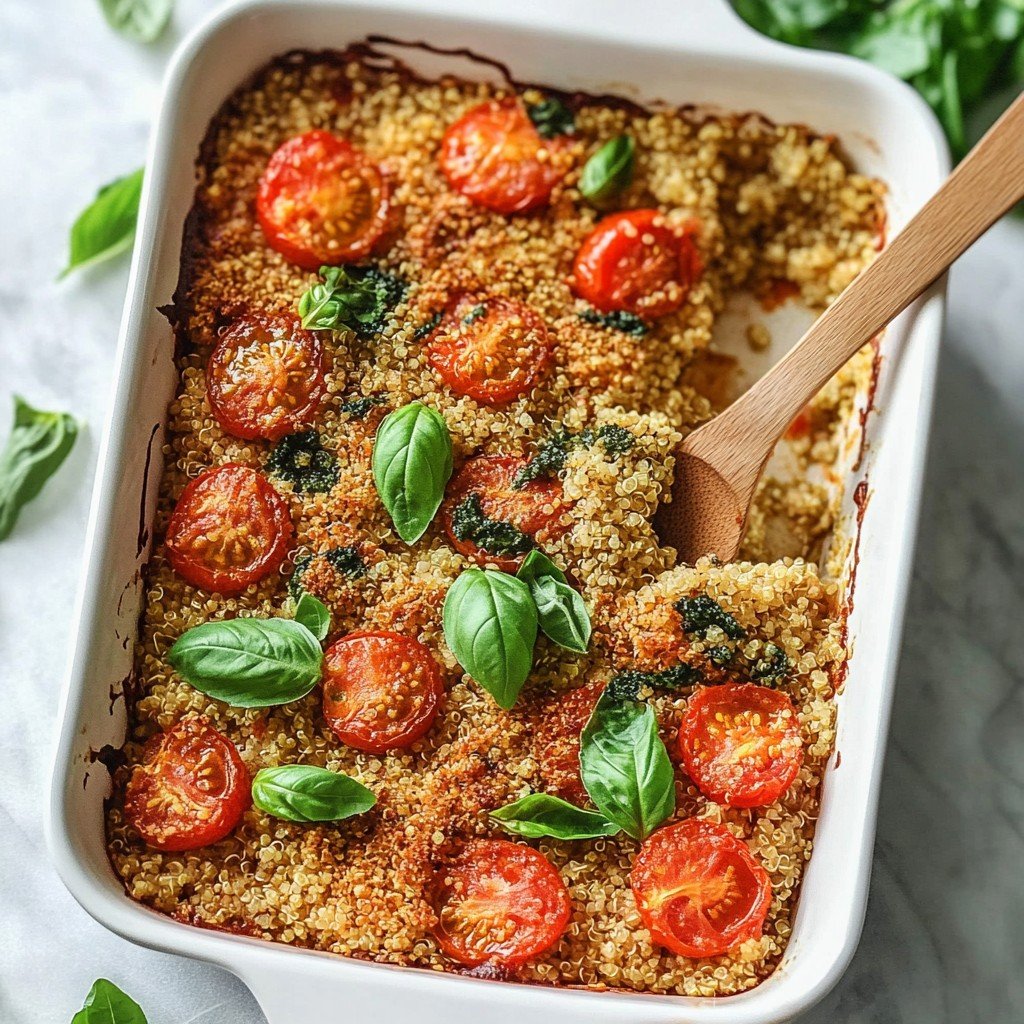
It features quinoa, a high-protein, gluten-free ancient grain that originated in South America but has quickly become a favorite in international kitchens. The Mediterranean diet is globally acclaimed for its balance, fresh vegetables, legumes, olive oil, and lean proteins – all of which are present in this comforting casserole.
Mediterranean Quinoa Casserole is effortless to prepare, making it ideal for busy weeknights, meal prep, or healthy family gatherings. It is also versatile, allowing for various vegetables and protein options to accommodate vegetarian, vegan, or meat-lover preferences.
The casserole’s origins trace back to the traditional layered vegetable bakes found throughout Greece, Italy, and the Middle East. By integrating quinoa, this dish adds a modern nutritional twist while respecting the classic flavors and textures of the region.
Whether you’re new to Mediterranean cuisine or a long-time enthusiast looking for robust, easy-to-make meal ideas, this Mediterranean Quinoa Casserole delivers on taste, convenience, and health. Enjoy this heartwarming dish that truly embodies the essence of Mediterranean living, with each bite offering a taste of sunshine and wellbeing.
Ingredients
- 1 cup uncooked quinoa, rinsed
- 2 cups vegetable broth or water
- 1 tablespoon extra-virgin olive oil
- 1 medium yellow onion, finely chopped
- 3 garlic cloves, minced
- 1 red bell pepper, diced
- 1 zucchini, diced
- 1 cup cherry tomatoes, halved
- 1 cup baby spinach, chopped
- 1/2 cup Kalamata olives, pitted and sliced
- 1/2 cup crumbled feta cheese
- 1 tablespoon dried oregano
- 1 teaspoon dried basil
- 1/2 teaspoon ground black pepper
- 1 teaspoon sea salt (or to taste)
- 1/4 teaspoon crushed red pepper flakes (optional)
- 1 (15-ounce) can chickpeas, drained and rinsed
- 1/2 cup sun-dried tomatoes, chopped
- Fresh parsley, for garnish
Instructions
- Preheat your oven to 375°F (190°C) and lightly grease a 9×13-inch baking dish.
- In a medium saucepan, bring the quinoa and vegetable broth or water to a boil. Reduce heat, cover, and simmer for 15 minutes or until all the liquid is absorbed. Fluff with a fork and set aside.
- While the quinoa cooks, heat olive oil in a large skillet over medium heat. Add the chopped onion and sauté for 3-4 minutes until softened.
- Stir in the minced garlic, red bell pepper, and zucchini. Cook, stirring occasionally, until the vegetables start to soften, about 5-6 minutes.
- Add the cherry tomatoes, spinach, and cook until the spinach is wilted, about 2 minutes.
- In a large bowl, combine the cooked quinoa, sautéed vegetables, Kalamata olives, crumbled feta cheese, oregano, basil, black pepper, salt, red pepper flakes, chickpeas, and sun-dried tomatoes. Mix gently until all ingredients are well incorporated.
- Transfer the mixture into the prepared baking dish, spreading it evenly.
- Bake for 25-30 minutes, or until the top is slightly golden and the casserole is heated through.
- Remove from the oven and let it cool for a few minutes. Garnish with fresh parsley before serving.
Nutritional Information
The Mediterranean Quinoa Casserole is not only bursting with flavor but also abundant in health-promoting nutrients, making it a fantastic choice for balanced eating. Each serving provides a robust mix of protein, fiber, and healthy fats with a relatively moderate calorie count.
Quinoa, the main grain in this casserole, is a complete protein, supplying all nine essential amino acids and offering a satisfying alternative for both vegetarians and omnivores. The addition of chickpeas further boosts the protein and fiber content, promoting satiety and digestive health.
Fresh vegetables like spinach, tomatoes, zucchini, and bell peppers are rich in vitamins A, C, and K, as well as antioxidants that support immune function and cellular health. Feta cheese and olives contribute healthy fats and minerals, enhancing flavor while offering calcium and heart-healthy monounsaturated fats.
A serving (approximately one-sixth of the recipe) offers around 320-350 calories, 14 grams of protein, 8 grams of fiber, 13 grams of healthy fats, and just 1 to 2 grams of saturated fat. This dish is low in cholesterol and refined sugars, helping to maintain stable blood sugar levels.
The Mediterranean Quinoa Casserole can be tailored for lower sodium by using reduced-salt feta and rinsing the olives and chickpeas, making it friendly for those watching their salt intake.
With its stellar nutritional profile, this casserole fits well within the principles of the Mediterranean diet, supporting overall wellness, heart health, and weight management.
Wine and Beverage Pairings
Pairing the Mediterranean Quinoa Casserole with the right beverage elevates the dining experience. A crisp, dry white wine, such as Sauvignon Blanc or Pinot Grigio, complements the bright Mediterranean flavors, cutting through the richness of the feta and olives without overpowering the dish.
For those who prefer red wine, a light-bodied option like a chilled Beaujolais or a young Grenache works well, highlighting the herbal notes and enhancing the tomato elements in the casserole.
If you’re looking for a non-alcoholic pairing, try a sparkling water infused with lemon, cucumber, and mint, or a homemade herbal iced tea with chamomile and a hint of citrus. For a more robust Mediterranean meal, serve with freshly brewed Turkish mint tea or a refreshing Greek lemonade.
No matter your choice, selecting a beverage with light, vibrant flavors will complement the Mediterranean Quinoa Casserole beautifully.
Cooking Tips and Variations
To truly master the Mediterranean Quinoa Casserole, consider a few helpful tricks and possible variations that will keep this dish exciting every time you prepare it. Using pre-rinsed or tri-color quinoa can save time and add a pop of color.
For a deeper flavor profile, toast the quinoa for a minute in olive oil before cooking. If you'd like to make this casserole vegan, simply omit the feta cheese or replace it with a plant-based alternative.
For those seeking extra protein, grilled chicken strips or cooked shrimp can be layered into the casserole just before baking. Roasted eggplant or artichoke hearts are excellent vegetable substitutes if you want to add a Mediterranean twist.
For a richer taste, try incorporating roasted garlic or a sprinkle of smoked paprika. Feel free to adjust the spice level by adding more crushed red pepper flakes or a few shakes of hot sauce.
The casserole can also be prepared ahead of time and refrigerated for up to two days before baking, making it incredibly convenient for meal planning. You can freeze leftovers in portioned containers for up to three months, making it a healthy, grab-and-go meal.
Finally, garnish generously with fresh herbs like basil or dill to enhance both flavor and presentation. By following some of these suggestions or creating your own personal twist, your Mediterranean Quinoa Casserole will become a staple dish that never fails to impress.
Serving Suggestions
The Mediterranean Quinoa Casserole is as versatile in serving as it is in preparation. It makes a wonderful centerpiece for a weeknight family dinner, potluck gathering, or festive occasion.
To serve, scoop generous portions onto plates, ensuring each serving includes plenty of the roasted vegetables and crumbly feta for balanced flavor and texture. This casserole pairs delightfully with a side of warm, crusty whole grain bread or pita for those who enjoy a bit of extra heartiness.
For a lighter meal, consider serving it alongside a simple Greek salad tossed with lemon-oregano vinaigrette and fresh herbs, which elevates the Mediterranean theme and adds a refreshing crunch. Another excellent accompaniment is a dollop of creamy tzatziki sauce, which offers a cooling contrast to the warm, savory casserole.
Leftovers are excellent the next day, either eaten cold as a filling salad or gently reheated in the oven or microwave. The casserole travels well, making it a prime candidate for meal prepping lunches or sharing at gatherings.
To ensure the best presentation when serving guests, garnish each portion with a sprinkle of fresh parsley or chives and a drizzle of high-quality olive oil.
Regardless of the occasion or setting, the Mediterranean Quinoa Casserole fits seamlessly into a variety of menus and meal plans, always delighting with its comforting, sun-soaked flavors.
Health Benefits
Mediterranean Quinoa Casserole is a powerhouse for healthy eating, incorporating ingredients known to support heart health, aid in weight management, and boost overall wellness.
The foundation of this dish, quinoa, is renowned for its high protein content and is one of the few plant foods containing all essential amino acids, making it excellent for vegans and vegetarians.
The casserole is loaded with fiber from vegetables and chickpeas, which aids digestion and helps control cholesterol and blood sugar levels. Olive oil and olives supply monounsaturated fats, which are linked to reduced inflammation and lower risk of heart disease.
Feta cheese adds calcium, crucial for bone health, while spinach brings in iron and antioxidant-rich phytonutrients. Including a rainbow of vegetables ensures you are consuming a wide range of vitamins, minerals, and antioxidants.
The dish is low in processed ingredients and free from refined sugars, keeping it in line with the Mediterranean diet’s principles—one of the world’s most recommended eating patterns for long-term health. Those monitoring sodium can easily modify the recipe for lower salt by adjusting the olives and cheese.
Overall, regularly enjoying Mediterranean Quinoa Casserole can contribute to sustained energy, improved metabolic health, and even support mood and cognitive function due to the synergy of healthy fats, complex carbs, and plant-based nutrients.
Frequently Asked Questions
Yes, you can make this casserole vegan by omitting the feta cheese or substituting it with a plant-based feta or nutritional yeast for a cheesy flavor.
Absolutely! You can assemble the casserole up to two days before baking. Store it covered in the refrigerator and bake it right before serving. Leftovers can also be refrigerated or frozen for future meals.
For extra protein, add cooked shredded chicken, ground turkey, or grilled shrimp to the casserole before baking. These additions work beautifully with the Mediterranean flavors.
To reduce sodium, use a low-sodium vegetable broth, rinse the olives and chickpeas well, and choose reduced-salt feta cheese. You can also add salt to taste after baking instead of mixing it in beforehand.
Yes, this casserole is naturally gluten-free, making it a flavorful and safe option for those with gluten sensitivities or celiac disease.
Mediterranean Quinoa Casserole captures the vibrant, fresh, and nutritious essence of Mediterranean cuisine in one convenient and delicious dish. With its colorful medley of wholesome ingredients, robust flavors, and exceptional versatility, this casserole is an ideal choice for anyone looking to eat healthfully without sacrificing taste. Its easy preparation, make-ahead options, and adaptability to various dietary preferences make it a staple for weeknight dinners, meal prepping, or special occasions. Enjoy the taste of the Mediterranean at your dining table with this delightful recipe that promises nourishment and enjoyment in every savory bite.
Ingredients
- 1 cup uncooked quinoa, rinsed
- 2 cups vegetable broth or water
- 1 tablespoon extra-virgin olive oil
- 1 medium yellow onion, finely chopped
- 3 garlic cloves, minced
- 1 red bell pepper, diced
- 1 zucchini, diced
- 1 cup cherry tomatoes, halved
- 1 cup baby spinach, chopped
- 1/2 cup Kalamata olives, pitted and sliced
- 1/2 cup crumbled feta cheese
- 1 tablespoon dried oregano
- 1 teaspoon dried basil
- 1/2 teaspoon ground black pepper
- 1 teaspoon sea salt (or to taste)
- 1/4 teaspoon crushed red pepper flakes (optional)
- 1 (15-ounce) can chickpeas, drained and rinsed
- 1/2 cup sun-dried tomatoes, chopped
- Fresh parsley, for garnish
Instructions
-
1Preheat your oven to 375°F (190°C) and lightly grease a 9×13-inch baking dish.
-
2In a medium saucepan, bring the quinoa and vegetable broth or water to a boil. Reduce heat, cover, and simmer for 15 minutes or until all the liquid is absorbed. Fluff with a fork and set aside.
-
3While the quinoa cooks, heat olive oil in a large skillet over medium heat. Add the chopped onion and sauté for 3-4 minutes until softened.
-
4Stir in the minced garlic, red bell pepper, and zucchini. Cook, stirring occasionally, until the vegetables start to soften, about 5-6 minutes.
-
5Add the cherry tomatoes, spinach, and cook until the spinach is wilted, about 2 minutes.
-
6In a large bowl, combine the cooked quinoa, sautéed vegetables, Kalamata olives, crumbled feta cheese, oregano, basil, black pepper, salt, red pepper flakes, chickpeas, and sun-dried tomatoes. Mix gently until all ingredients are well incorporated.
-
7Transfer the mixture into the prepared baking dish, spreading it evenly.
-
8Bake for 25-30 minutes, or until the top is slightly golden and the casserole is heated through.
-
9Remove from the oven and let it cool for a few minutes. Garnish with fresh parsley before serving.
Approximate Information for One Serving
Nutrition Disclaimers
Number of total servings shown is approximate. Actual number of servings will depend on your preferred portion sizes.
Nutritional values shown are general guidelines and reflect information for 1 serving using the ingredients listed, not including any optional ingredients. Actual macros may vary slightly depending on specific brands and types of ingredients used.
To determine the weight of one serving, prepare the recipe as instructed. Weigh the finished recipe, then divide the weight of the finished recipe (not including the weight of the container the food is in) by the desired number of servings. Result will be the weight of one serving.
Did you make this recipe?
Please consider Pinning it!