An Asparagus and Goat Cheese Tart is a quintessential springtime dish that combines tender spears of fresh asparagus with the tangy creaminess of goat cheese atop a flaky pastry base. This tart has become a popular choice for brunches, lunches, and light dinners, especially when fresh asparagus bursts into season.
French and Mediterranean cuisines have long appreciated the aromatic blend of creamy cheeses, crisp vegetables, and buttery pastry. The goat cheese brings a subtle tang and velvety texture, balancing the earthy bitterness of asparagus perfectly.
Puff pastry, readily available in most markets, simplifies the preparation, making this recipe approachable even for home cooks with little time but a passion for flavor. Over the years, asparagus tarts have gained traction as a favorite among vegetarians and food enthusiasts seeking elegant, easy-to-share dishes for gatherings or picnics.
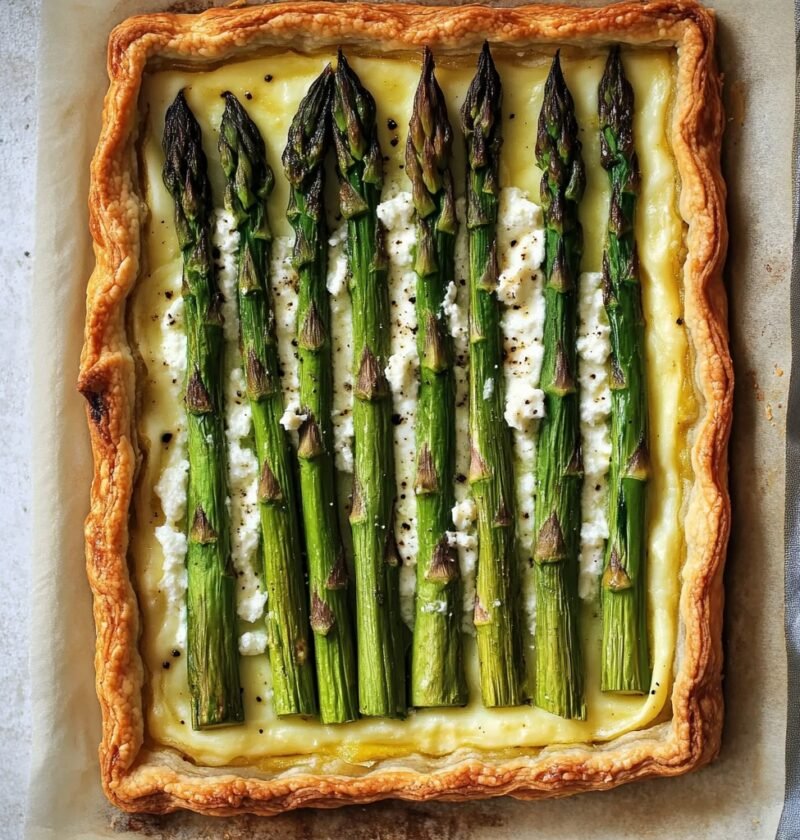
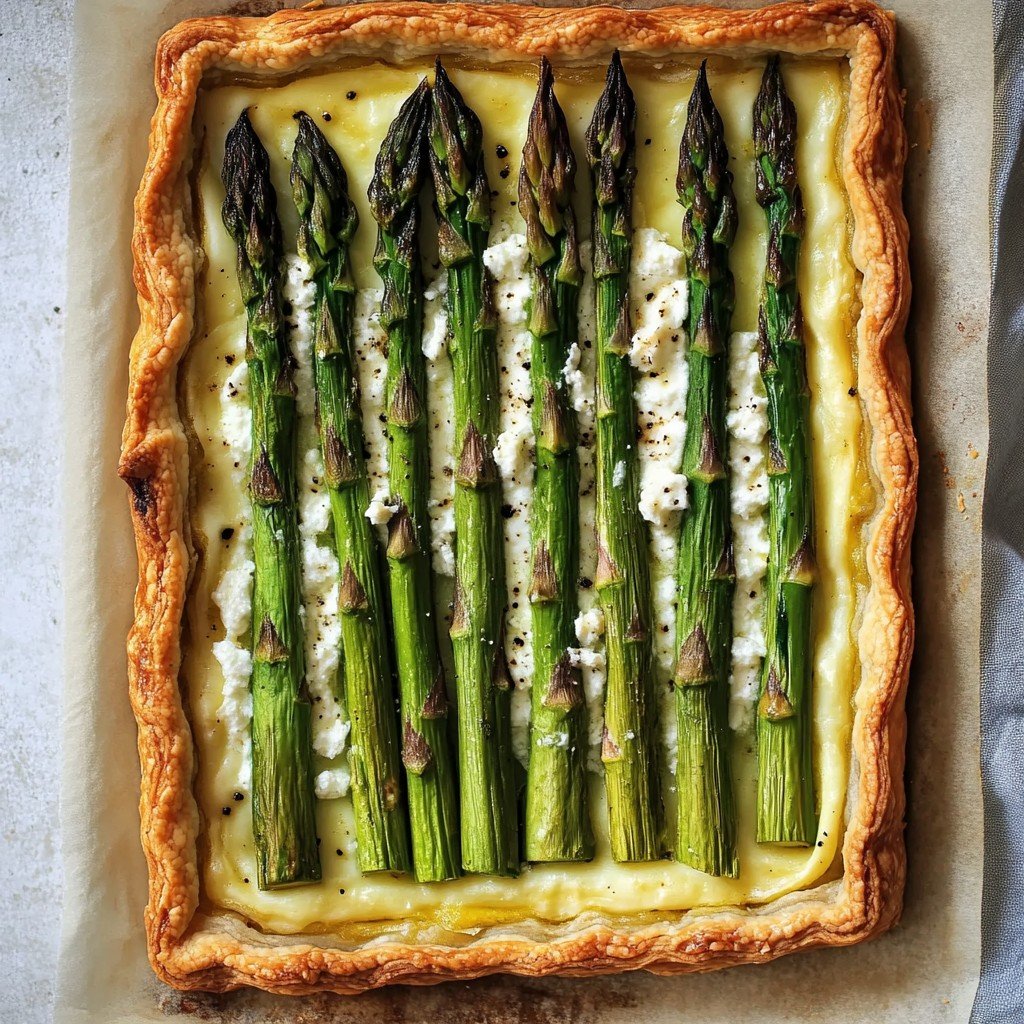
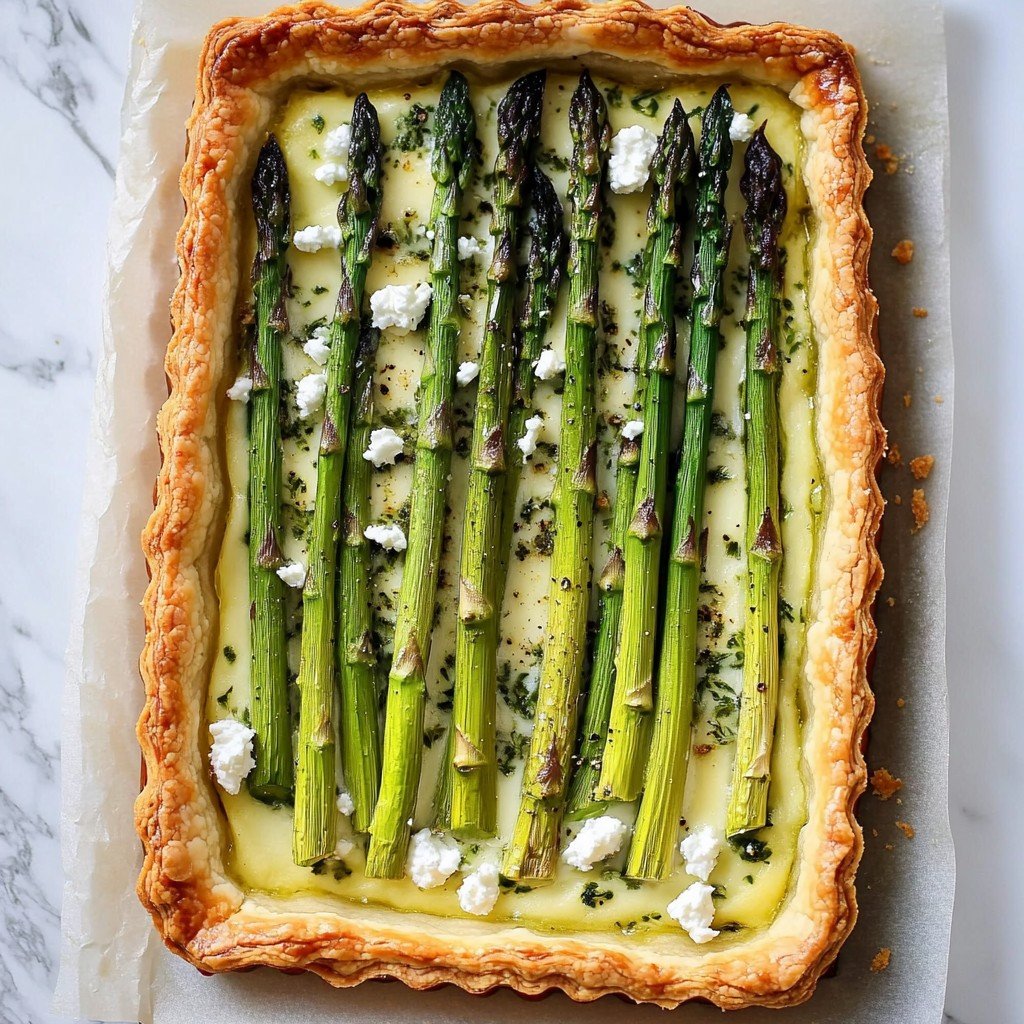
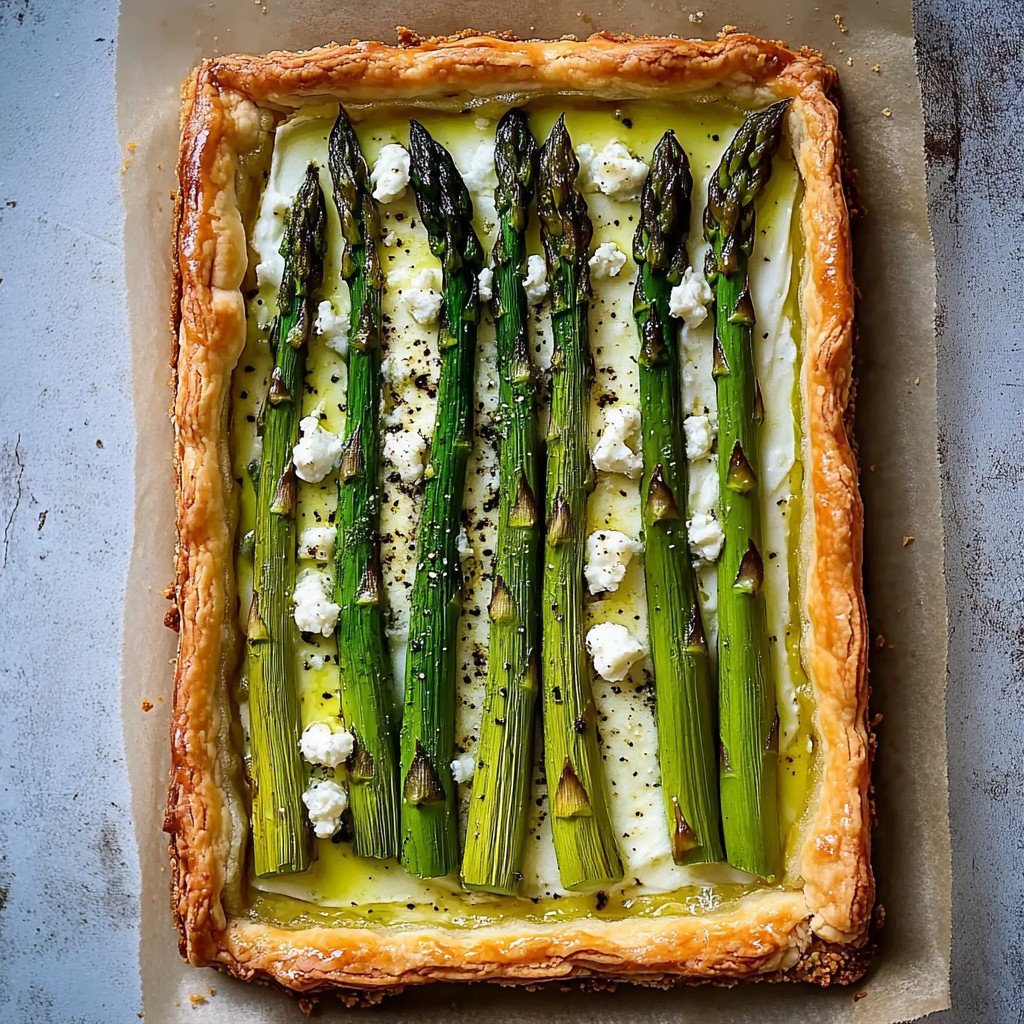
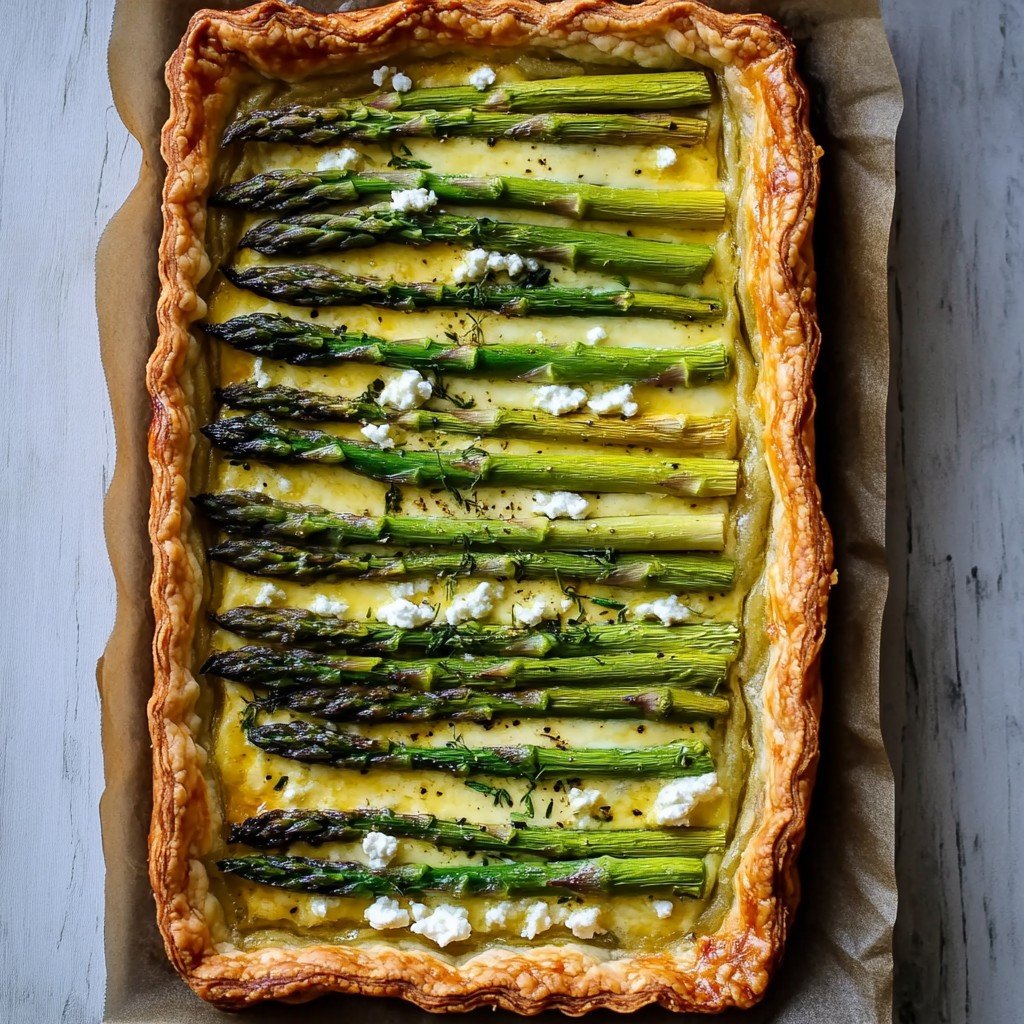
Their visual appeal—vivid green asparagus nestled atop golden-brown pastry accented with creamy white cheese—makes this tart a show-stopper on any table. Whether served warm or at room temperature, the Asparagus and Goat Cheese Tart delivers a memorable bite, beloved for its balance of textures and robust yet delicate flavors.
It is not only a feast for the palate but also a celebration of seasonal, fresh ingredients, perfect for anyone who enjoys healthy and delicious cuisine.
Ingredients
- 1 sheet of puff pastry, thawed
- 12-16 fresh asparagus spears, trimmed
- 5 ounces goat cheese, softened
- 1/4 cup cream cheese, softened
- 1 large egg
- 1 tablespoon extra virgin olive oil
- 1 tablespoon lemon zest
- 1 teaspoon fresh thyme leaves (or 1/2 tsp dried thyme)
- Salt and freshly ground black pepper, to taste
- 1 tablespoon grated Parmesan cheese (optional)
- 1 tablespoon milk or water (for egg wash)
Instructions
- Preheat your oven to 400°F (200°C). Line a baking sheet with parchment paper.
- Roll out the puff pastry on a lightly floured surface to smooth the creases and ensure it fits your desired baking tray. Transfer it to the prepared baking sheet.
- Using a sharp knife, score a border about 1 inch from the edges, being careful not to cut all the way through. This will form the tart's crust as it bakes.
- Prick the interior of the pastry with a fork several times to prevent bubbles during baking.
- In a small bowl, blend the goat cheese, cream cheese, and lemon zest until smooth and spreadable. Season with salt, pepper, and add fresh thyme leaves.
- Spread the mixture evenly within the scored border of the pastry.
- Arrange the asparagus spears over the cheese filling, gently pressing them into the mixture. Depending on their thickness, you may want to blanch thicker asparagus for 1-2 minutes before arranging.
- Brush the exposed pastry border with an egg wash made by whisking the egg and milk or water together.
- Drizzle the arranged asparagus with olive oil and sprinkle a pinch of salt and pepper.
- Sprinkle grated Parmesan over the top if using.
- Bake in the preheated oven for 22-28 minutes, or until the pastry is puffed and golden brown and the asparagus is tender.
- Allow the tart to cool for 5 minutes before slicing. Serve warm or at room temperature.
Nutritional Information
The Asparagus and Goat Cheese Tart is a delightful combination of nutrition and flavor, making it both a treat for your taste buds and a nourishing option for your meals.
Each slice features the wholesome goodness of asparagus, which is low in calories and packed with vitamins such as A, C, E, and K, as well as folate and fiber. Asparagus is also rich in antioxidants, supporting immune function and anti-inflammatory responses.
Goat cheese, though creamy and decadent, is typically lower in calories and fat when compared to cow’s milk cheeses, and it offers a good amount of protein, calcium, and healthy probiotics to support digestion. The inclusion of extra virgin olive oil adds beneficial monounsaturated fats, known to support heart health.
Puff pastry does contribute saturated fat and refined carbohydrates, which means enjoying this tart in moderation as part of a balanced diet is key. For those monitoring sodium or caloric intake, consider using a lighter cheese or a whole wheat pastry substitution.
Overall, this tart can impart about 220-280 calories per serving, depending on slice size, and delivers essential nutrients while making vegetables the main event of your meal.
Its array of textures and flavors allows you to make informed choices, savor the dish’s benefits, and enjoy an elegant recipe that aligns with your nutritional goals.
Wine and Beverage Pairings
The bright, tangy notes of goat cheese and the earthiness of asparagus in this tart pair beautifully with a crisp, refreshing beverage. A vibrant Sauvignon Blanc is a classic choice, thanks to its herbaceous undertones and clean finish that complement both asparagus and the cheese.
For lovers of sparkling drinks, a dry Prosecco or Champagne offers the acidity and bubbles needed to cut through the richness of the pastry. If you prefer non-alcoholic options, a cold-pressed apple cider or lightly sparkling lemon water provides a refreshing contrast without overpowering the dish.
Green teas with citrus or herbal notes also work well for a gentle, palate-cleansing pairing.
Cooking Tips and Variations
For best results, always use the freshest asparagus you can find, preferably medium-thick spears for optimal tenderness and visual appeal.
If your asparagus is particularly thick, blanch it for a minute in boiling water and pat dry before arranging it on the tart, ensuring it cooks through in tandem with the pastry.
Opt for high-quality goat cheese with a creamy texture for easy blending and even spread; you might experiment with herbed goat cheese for heightened flavor. If you prefer a milder taste, mixing in a touch of ricotta or mascarpone smooths out the tanginess.
To avoid a soggy bottom, make sure to prick the pastry base generously and preheat your oven fully so the tart bakes evenly. Adding a sprinkle of sesame or poppy seeds to the exposed pastry border can enhance both crunch and flavor.
For variations, consider incorporating other vegetables like baby leeks, sautéed mushrooms, or cherry tomatoes for added color and complexity. This recipe is also adaptable for dietary needs—use gluten-free puff pastry or a lighter cheese version if preferred.
Leftovers keep well in an airtight container in the refrigerator for two days and can be reheated or eaten cold, making meal prep a breeze.
Serving Suggestions
The Asparagus and Goat Cheese Tart is a versatile dish suitable for many occasions, and its elegant appearance makes it ideal for sharing. Serve it as the centerpiece of a brunch buffet, sliced into generous wedges alongside mixed green salads tossed with a simple vinaigrette.
For a light lunch or dinner, pair the tart with a bowl of chilled soup—such as a cucumber or gazpacho—for a refreshing contrast. Garnish with extra lemon zest or fresh thyme after baking to enhance its aromatic allure.
When preparing for parties or gatherings, cut the tart into bite-sized squares or rectangles for an appealing appetizer platter. This tart also makes a thoughtful vegetarian offering at picnics, easily packed and served at room temperature.
If planning ahead, the tart can be assembled a few hours in advance and baked just before serving, ensuring flaky pastry and vibrant asparagus. For a richer meal, serve with roasted potatoes or a selection of antipasti.
A light drizzle of balsamic glaze or a sprinkle of toasted nuts post-bake offers additional flavor dimensions. Always use a sharp knife to slice for clean edges, and consider presenting the tart on a large board or platter with edible flowers for an added touch of sophistication.
Leftovers are just as delicious the next day, either slightly reheated or enjoyed as a cold snack.
Health Benefits
This tart is a wonderful way to increase your intake of vegetables and provide your body with a wealth of beneficial nutrients. Asparagus is particularly celebrated for its diuretic properties, assisting with healthy kidney function and aiding detoxification.
It is high in vitamin K, crucial for bone health, and contains folate, important for metabolic processes and prenatal health. Goat cheese is more digestible than many cow’s milk cheeses, making it a good option for those with sensitive stomachs or mild lactose intolerance.
The healthy fats present in olive oil, coupled with the protein provided by cheese, help promote satiety and balanced energy levels. Using fresh herbs not only improves the tart’s flavor but also offers antioxidants and micronutrients valuable for general wellness.
The tart is also lower in saturated fats compared to dishes laden with heavy creams or butter, especially if you opt for low-fat cheese or whole-grain puff pastry. For those watching their sodium intake, reducing added salt and cheese can be beneficial.
Overall, including this tart in a balanced meal plan contributes to daily vegetable servings and provides a satisfying way to enjoy clean, seasonal eating.
Frequently Asked Questions
Yes, you can assemble the tart a few hours before baking and refrigerate it. Alternatively, bake the tart fully, let it cool, and reheat gently in the oven before serving.
Absolutely. Cream cheese, ricotta, or feta are excellent alternatives and each offers a unique flavor and texture. For a milder taste, mix in a little mascarpone or cottage cheese.
Prick the pastry with a fork, avoid overloading with wet ingredients, and bake in a preheated oven to ensure a crisp, golden base. Be cautious with any added sauces or liquids on top.
Yes, simply substitute the regular puff pastry with a gluten-free version, which is available in many grocery stores. The remaining ingredients are naturally gluten-free.
Store leftover tart slices in an airtight container in the refrigerator. They will remain fresh for up to two days and can be enjoyed cold or reheated in the oven.
The Asparagus and Goat Cheese Tart is an elegant, flavorful dish that beautifully portrays the harmony between fresh, seasonal vegetables and creamy, tangy cheese nestled in a golden pastry shell. Its simplicity in preparation belies its gourmet appearance, making it a perfect choice for home cooks aiming to impress without spending hours in the kitchen. As versatile as it is delicious, this tart is suitable for any occasion—from sophisticated gatherings to casual family suppers—and adapts easily to various tastes and dietary needs. Enjoy it as a light main course, a standout appetizer, or a gourmet brunch item. With its superb balance of texture and taste, the Asparagus and Goat Cheese Tart is set to become a cherished favorite in your culinary repertoire.
Ingredients
- 1 sheet of puff pastry, thawed
- 12-16 fresh asparagus spears, trimmed
- 5 ounces goat cheese, softened
- 1/4 cup cream cheese, softened
- 1 large egg
- 1 tablespoon extra virgin olive oil
- 1 tablespoon lemon zest
- 1 teaspoon fresh thyme leaves (or 1/2 tsp dried thyme)
- Salt and freshly ground black pepper, to taste
- 1 tablespoon grated Parmesan cheese (optional)
- 1 tablespoon milk or water (for egg wash)
Instructions
-
1Preheat your oven to 400°F (200°C). Line a baking sheet with parchment paper.
-
2Roll out the puff pastry on a lightly floured surface to smooth the creases and ensure it fits your desired baking tray. Transfer it to the prepared baking sheet.
-
3Using a sharp knife, score a border about 1 inch from the edges, being careful not to cut all the way through. This will form the tart’s crust as it bakes.
-
4Prick the interior of the pastry with a fork several times to prevent bubbles during baking.
-
5In a small bowl, blend the goat cheese, cream cheese, and lemon zest until smooth and spreadable. Season with salt, pepper, and add fresh thyme leaves.
-
6Spread the mixture evenly within the scored border of the pastry.
-
7Arrange the asparagus spears over the cheese filling, gently pressing them into the mixture. Depending on their thickness, you may want to blanch thicker asparagus for 1-2 minutes before arranging.
-
8Brush the exposed pastry border with an egg wash made by whisking the egg and milk or water together.
-
9Drizzle the arranged asparagus with olive oil and sprinkle a pinch of salt and pepper.
-
10Sprinkle grated Parmesan over the top if using.
-
11Bake in the preheated oven for 22-28 minutes, or until the pastry is puffed and golden brown and the asparagus is tender.
-
12Allow the tart to cool for 5 minutes before slicing. Serve warm or at room temperature.
Approximate Information for One Serving
Nutrition Disclaimers
Number of total servings shown is approximate. Actual number of servings will depend on your preferred portion sizes.
Nutritional values shown are general guidelines and reflect information for 1 serving using the ingredients listed, not including any optional ingredients. Actual macros may vary slightly depending on specific brands and types of ingredients used.
To determine the weight of one serving, prepare the recipe as instructed. Weigh the finished recipe, then divide the weight of the finished recipe (not including the weight of the container the food is in) by the desired number of servings. Result will be the weight of one serving.
Did you make this recipe?
Please consider Pinning it!