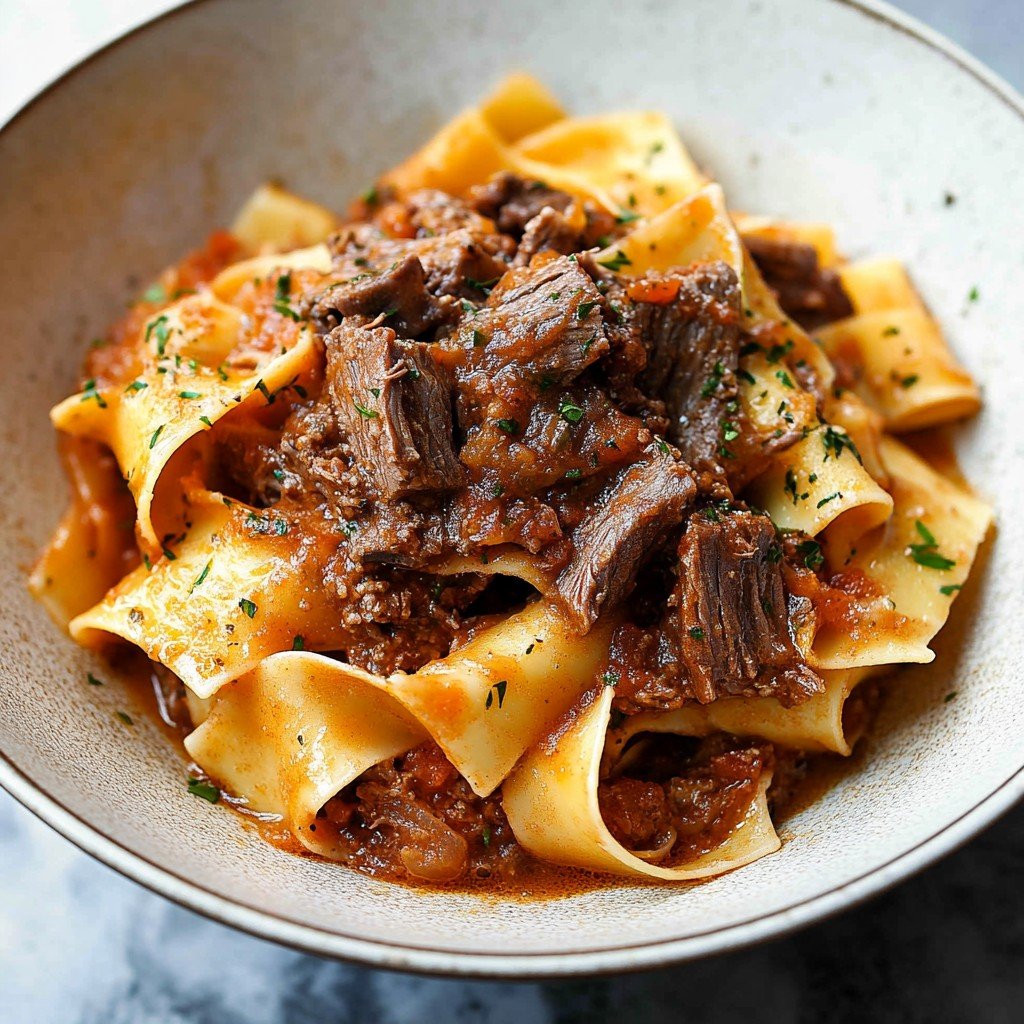
Beef Short Rib Ragu is the epitome of Italian comfort food, known for its rich, deep flavors and melt-in-your-mouth texture. Traditionally slow-cooked, this dish has roots in rustic Italian kitchens where simple, robust ingredients are simmered to perfection.

A classic ragu is typically made with slow-braised meats, aromatic vegetables, and a tomato-forward sauce, and beef short ribs are among the most prized cuts for this preparation.
Their marbled texture lends both flavor and succulence to the dish, while the long, gentle braise breaks down the tough connective tissues into a luscious, velvety sauce.
Over the centuries, Beef Short Rib Ragu has become a staple in many Italian households, passed down through generations and beloved for its ability to transform everyday ingredients into something extraordinary.
Today, Beef Short Rib Ragu is not only a mainstay on Italian restaurant menus but also a favorite for home cooks seeking a comforting, crowd-pleasing meal. The dish beautifully celebrates traditional slow cooking and the rich, meaty flavors that result.
Served over wide pasta ribbons like pappardelle or creamy polenta, Beef Short Rib Ragu turns any meal into a special occasion. Its versatility allows for adaptations, but the core remains unchanged: succulent beef short ribs, a medley of vegetables, and a luscious tomato-red wine sauce simmered to perfection.
Whether you are preparing a family Sunday dinner or an impressive meal for guests, Beef Short Rib Ragu is a dish that brings warmth and delight to the table.
Ingredients
- 3 lbs bone-in beef short ribs
- Salt and freshly ground black pepper, to taste
- 2 tablespoons olive oil
- 1 large onion, finely diced
- 2 celery stalks, finely diced
- 2 carrots, finely diced
- 4 garlic cloves, minced
- 2 tablespoons tomato paste
- 1 cup dry red wine
- 1 can (28 oz) crushed tomatoes
- 1 cup beef broth
- 2 bay leaves
- 1 teaspoon dried rosemary
- 1 teaspoon dried thyme
- 1/2 teaspoon crushed red pepper flakes (optional)
- Fresh parsley or basil, chopped (for garnish)
- Freshly grated Parmigiano-Reggiano cheese, for serving
- Cooked pasta (pappardelle, tagliatelle, or rigatoni), polenta, or creamy mashed potatoes
Instructions
- Season the beef short ribs generously with salt and pepper on all sides.
- Heat the olive oil in a large Dutch oven or heavy-bottomed pot over medium-high heat. When hot, add the short ribs and sear on all sides until well browned, working in batches if needed. Transfer the browned ribs to a plate and set aside.
- In the same pot, reduce heat to medium. Add the onion, celery, and carrots. Cook, stirring often, until the vegetables are softened and starting to caramelize, about 8-10 minutes.
- Stir in the minced garlic and tomato paste, cooking for another 1-2 minutes until aromatic and the paste darkens slightly.
- Pour in the red wine and use a wooden spoon to scrape up browned bits from the bottom of the pot. Let the wine simmer and reduce by about half, approximately 5 minutes.
- Add the crushed tomatoes, beef broth, bay leaves, rosemary, thyme, and crushed red pepper flakes if using. Stir to combine.
- Return the seared short ribs to the pot, nestling them into the sauce. Bring to a gentle simmer.
- Cover the pot with a lid and reduce the heat to low. Simmer gently for 2.5 to 3 hours, or until the short ribs are fork-tender and the meat is falling off the bone. Occasionally, skim off any fat that rises to the surface.
- Remove the short ribs from the sauce. Discard bones and excess fat. Shred the meat with two forks, then return it to the sauce.
- Simmer the ragu uncovered for an additional 15-20 minutes to thicken, if needed. Adjust seasoning with additional salt and pepper to taste.
- Serve the Beef Short Rib Ragu over cooked pasta, creamy polenta, or mashed potatoes. Garnish with parsley or basil and a generous sprinkle of Parmigiano-Reggiano cheese.
Nutritional Information
A serving of Beef Short Rib Ragu, when served over pasta or polenta, provides a hearty and nourishing meal. This dish is high in protein, contributed by the beef short ribs, essential for muscle maintenance and repair.
The carbohydrates largely come from pasta or polenta, offering energy to fuel your day. The slow-cooked vegetables—onion, carrot, and celery—add dietary fiber, vitamins, and antioxidants, while the tomato-based sauce is a significant source of vitamin C, potassium, and the antioxidant lycopene.
The olive oil and beef fat provide healthy and saturated fats, contributing to the dish’s richness.
On average, one serving contains approximately 600-750 calories, 35-40 grams of protein, 30-40 grams of fat (depending on how much fat is skimmed off), and 60 grams of carbohydrates if served over a generous portion of pasta.
Sodium content can be moderate to high depending on seasoning and the use of canned tomatoes, so those monitoring salt intake should adjust accordingly. The meal is satiating thanks to its high protein and fiber content, making it ideal for a main course that doesn’t leave you hungry.
For lighter versions, serve with more vegetables or opt for whole grain pasta. As always, balance portion sizes to meet your nutritional needs and enjoy Beef Short Rib Ragu as part of a varied, wholesome diet.
Wine and Beverage Pairings
Beef Short Rib Ragu is beautifully complemented by bold, full-bodied red wines that can hold up to its richness. Pair with Italian classics such as Barolo, Chianti Classico, or Brunello di Montalcino for a harmonious match.
Cabernet Sauvignon, Syrah, or a robust Merlot are excellent alternatives if you prefer New World wines. For those opting for a non-alcoholic choice, a sparkling water with a squeeze of lemon or a rich, unsweetened black tea can refresh the palate between bites.
If serving for a special occasion, consider a lightly sparkling red such as Lambrusco for a festive touch. The ideal beverage pairing will balance the dish’s savory, robust flavors and cleanse the palate for each delicious bite.
Cooking Tips and Variations
To achieve the most flavorful Beef Short Rib Ragu, use bone-in short ribs, as the marrow and bones add depth and richness to the sauce. Sear the meat thoroughly before braising; this crucial step develops the fond that forms the foundation of your ragu’s flavor.
When browning, avoid overcrowding the pot—work in batches to ensure even caramelization. For the vegetables, dicing them finely ensures they melt into the sauce, contributing body and sweetness. When deglazing with wine, allow it to reduce well to concentrate flavor and mellow any sharpness.
This ragu benefits tremendously from a long, gentle simmer; patience is key, as the flavors meld over time to achieve the dish’s characteristic richness. For convenience, prepare the ragu a day ahead—the flavors deepen overnight and the sauce thickens. Remove any solidified fat from the surface before reheating.
For variations, consider adding a Parmesan rind to the simmering sauce for extra umami, or stir in a splash of cream at the end for silkiness. Swap out herbs to suit your taste, or add mushrooms for earthiness.
For a lighter version, trim excess fat from the ribs before browning, or use boneless short ribs. This dish also freezes beautifully; store leftovers in airtight containers for up to three months.
Whether you serve it over pasta, polenta, or mashed potatoes, Beef Short Rib Ragu is as adaptable as it is delicious.

Serving Suggestions
Beef Short Rib Ragu is a standout centerpiece for gatherings and family dinners alike. Serve it generously ladled over wide coin-like pappardelle or tagliatelle, which capture the chunky sauce perfectly. For a gluten-free option, creamy polenta provides an excellent base, its buttery smoothness pairing ideally with the bold ragu.
Rustic mashed potatoes also serve as a hearty alternative, ideal for soaking up every drop of sauce. To elevate the experience, finish each serving with freshly chopped parsley or basil and a generous grating of Parmigiano-Reggiano cheese, which adds a nutty, salty contrast.
Consider accompanying the ragu with a crisp green salad dressed simply with lemon and olive oil, and a side of crusty bread or focaccia to mop up any remaining sauce.
For a memorable presentation at a dinner party, serve Beef Short Rib Ragu in large shallow bowls with family-style sides, encouraging guests to help themselves. When portioning, remember that this dish is robust and filling—a little goes a long way.
Leftover ragu can be transformed into a baked rigatoni or used as a filling for lasagna, extending the enjoyment of this delicious meal. However you choose to serve it, Beef Short Rib Ragu is guaranteed to bring warmth, pleasure, and a touch of Italian tradition to your table.
Health Benefits
While Beef Short Rib Ragu is undoubtedly a decadent and comforting meal, it also offers several health benefits when enjoyed in moderation.
The short ribs provide high-quality protein, essential amino acids, and minerals such as iron and zinc, all of which are important for muscle health, immune function, and overall vitality.
The slow-cooked vegetables not only impart depth of flavor but are also rich in dietary fiber, vitamins A and C, and an array of antioxidants. Tomato-based sauces, central to the ragu, are a notable source of lycopene, an antioxidant linked to heart health and disease prevention.
Opting for leaner cuts and skimming off excess fat can help manage saturated fat intake, and serving the ragu with whole grain pasta or polenta adds complex carbohydrates and additional fiber. For those monitoring sodium, using low-sodium broth and unsalted tomatoes provides a healthier profile.
Overall, when paired with balanced sides and greens, Beef Short Rib Ragu can be part of a nourishing, satisfying, and varied diet, combining hearty enjoyment with essential nutrients.

Frequently Asked Questions
Yes, Beef Short Rib Ragu is an excellent dish to prepare ahead of time. In fact, the flavors improve after a night in the refrigerator. Store in an airtight container and gently reheat before serving.
Wide, flat noodles such as pappardelle or tagliatelle are traditional and ideal for capturing the hearty sauce, but rigatoni or polenta also work beautifully.
Absolutely. Allow the ragu to cool completely, then store in an airtight container and freeze for up to three months. Thaw in the refrigerator before reheating.
Yes, simply serve the Beef Short Rib Ragu over gluten-free pasta, polenta, or mashed potatoes to accommodate gluten-free needs.
If you prefer not to use wine, replace it with additional beef broth plus a tablespoon of balsamic vinegar for depth and acidity.
Beef Short Rib Ragu is more than just a meal; it’s an invitation into the heart of Italian comfort cooking. With its luscious, slow-cooked sauce and tender, flavorful meat, this ragu offers a culinary experience that’s as satisfying as it is versatile. Whether you serve it for a cozy family dinner or as the highlight of a festive gathering, it’s guaranteed to delight your guests and leave them craving more. Embrace the slow-cooking process, experiment with your favorite serving styles, and enjoy the timeless pleasure of Beef Short Rib Ragu—a dish that brings people together around the table and creates memories to savor.
Ingredients
- 3 lbs bone-in beef short ribs
- Salt and freshly ground black pepper, to taste
- 2 tablespoons olive oil
- 1 large onion, finely diced
- 2 celery stalks, finely diced
- 2 carrots, finely diced
- 4 garlic cloves, minced
- 2 tablespoons tomato paste
- 1 cup dry red wine
- 1 can (28 oz) crushed tomatoes
- 1 cup beef broth
- 2 bay leaves
- 1 teaspoon dried rosemary
- 1 teaspoon dried thyme
- 1/2 teaspoon crushed red pepper flakes (optional)
- Fresh parsley or basil, chopped (for garnish)
- Freshly grated Parmigiano-Reggiano cheese, for serving
- Cooked pasta (pappardelle, tagliatelle, or rigatoni), polenta, or creamy mashed potatoes
Instructions
-
1Season the beef short ribs generously with salt and pepper on all sides.
-
2Heat the olive oil in a large Dutch oven or heavy-bottomed pot over medium-high heat. When hot, add the short ribs and sear on all sides until well browned, working in batches if needed. Transfer the browned ribs to a plate and set aside.
-
3In the same pot, reduce heat to medium. Add the onion, celery, and carrots. Cook, stirring often, until the vegetables are softened and starting to caramelize, about 8-10 minutes.
-
4Stir in the minced garlic and tomato paste, cooking for another 1-2 minutes until aromatic and the paste darkens slightly.
-
5Pour in the red wine and use a wooden spoon to scrape up browned bits from the bottom of the pot. Let the wine simmer and reduce by about half, approximately 5 minutes.
-
6Add the crushed tomatoes, beef broth, bay leaves, rosemary, thyme, and crushed red pepper flakes if using. Stir to combine.
-
7Return the seared short ribs to the pot, nestling them into the sauce. Bring to a gentle simmer.
-
8Cover the pot with a lid and reduce the heat to low. Simmer gently for 2.5 to 3 hours, or until the short ribs are fork-tender and the meat is falling off the bone. Occasionally, skim off any fat that rises to the surface.
-
9Remove the short ribs from the sauce. Discard bones and excess fat. Shred the meat with two forks, then return it to the sauce.
-
10Simmer the ragu uncovered for an additional 15-20 minutes to thicken, if needed. Adjust seasoning with additional salt and pepper to taste.
-
11Serve the Beef Short Rib Ragu over cooked pasta, creamy polenta, or mashed potatoes. Garnish with parsley or basil and a generous sprinkle of Parmigiano-Reggiano cheese.
Approximate Information for One Serving
Nutrition Disclaimers
Number of total servings shown is approximate. Actual number of servings will depend on your preferred portion sizes.
Nutritional values shown are general guidelines and reflect information for 1 serving using the ingredients listed, not including any optional ingredients. Actual macros may vary slightly depending on specific brands and types of ingredients used.
To determine the weight of one serving, prepare the recipe as instructed. Weigh the finished recipe, then divide the weight of the finished recipe (not including the weight of the container the food is in) by the desired number of servings. Result will be the weight of one serving.
Did you make this recipe?
Please consider Pinning it!