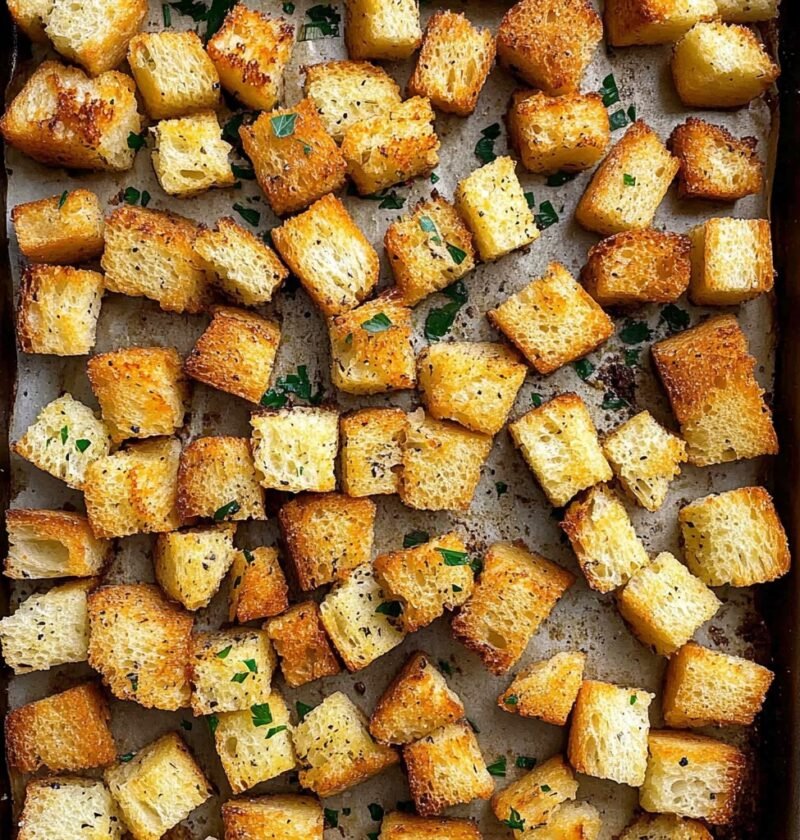
Easy Homemade Croutons are a delightful addition to salads, soups, and even casseroles. The history of croutons dates back to medieval Europe, where resourceful cooks would make use of stale bread by toasting it in various ways to give it new life.
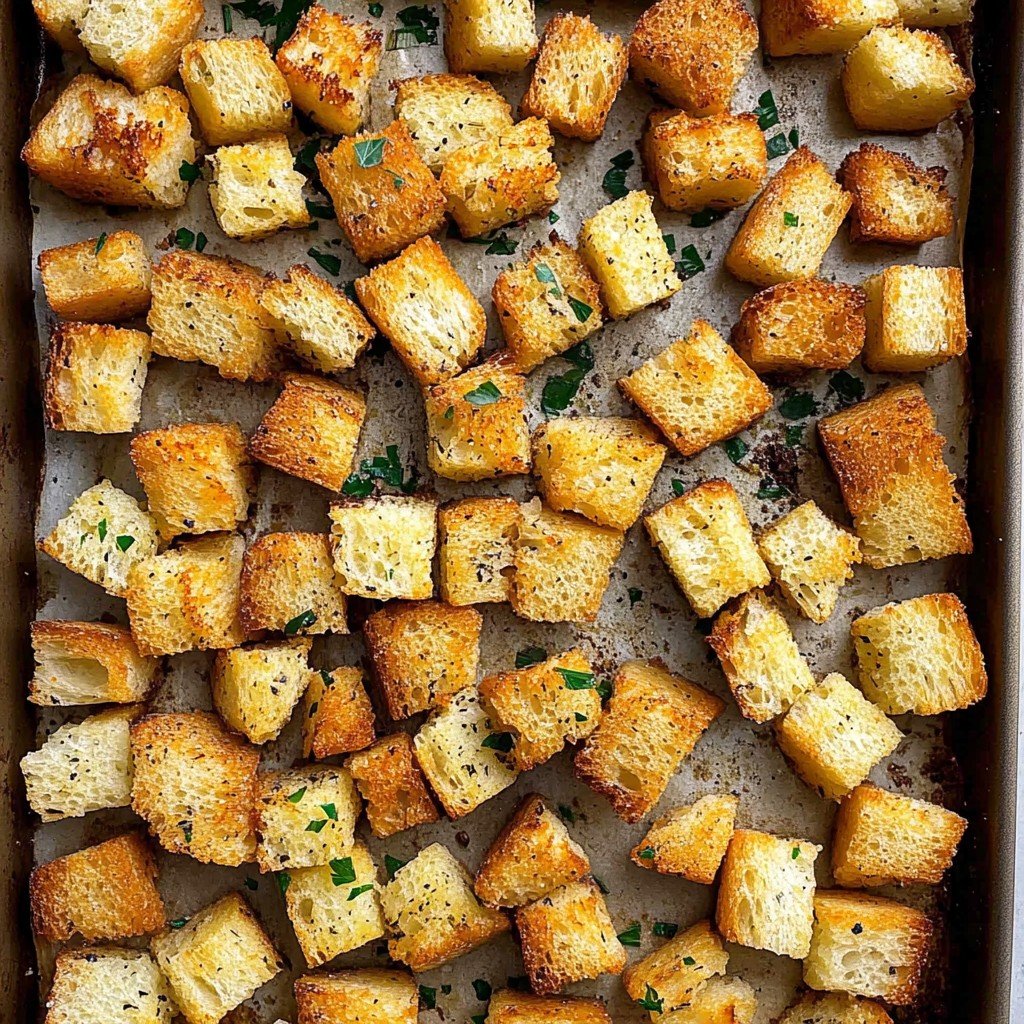
The word "crouton" originates from the French word "croûte", meaning "crust." Over the centuries, croutons have become a staple in kitchens worldwide, not only for their cost-effectiveness but also for the incredible flavor and texture they bring to dishes.
Today, with the focus on minimizing food waste and enjoying fresh, quality ingredients, homemade croutons are more popular than ever.
There is something truly special about crafting your own croutons: from selecting the bread to seasoning each cube to perfection, it invites creativity and guarantees a fresher, tastier result than most store-bought alternatives.
Making easy homemade croutons means you control the seasoning, choose the bread, and ensure each bite is crispy, golden brown, and full of flavor.
Whether you’re looking to add some crunch to your Caesar salad or want a satisfying snack, learning to make croutons at home is a useful skill that guarantees results beyond anything you can purchase.
Easy homemade croutons are all about transforming simple ingredients into a gourmet touch that elevates everyday meals.
Ingredients
- 4 cups day-old bread (French, Italian, sourdough, or any hearty bread), cut into ½-inch cubes
- 3 tablespoons extra virgin olive oil or melted unsalted butter
- 1 teaspoon garlic powder
- 1 teaspoon dried Italian herbs (oregano, basil, or thyme)
- ½ teaspoon salt
- ¼ teaspoon freshly ground black pepper
- Optional: ¼ cup finely grated Parmesan cheese
- Optional: pinch of smoked paprika or cayenne for extra flavor
Instructions
- Preheat your oven to 375°F (190°C) and line a large baking sheet with parchment paper for easy cleanup.
- Place the bread cubes in a large bowl. Drizzle the olive oil or melted butter evenly over the cubes.
- Sprinkle the garlic powder, dried Italian herbs, salt, and black pepper over the bread.
- If using, add the Parmesan cheese and additional spices such as smoked paprika or cayenne for extra zest.
- Toss the bread cubes gently but thoroughly so each piece is evenly coated with the oil and seasonings.
- Spread the seasoned bread cubes in a single layer on the prepared baking sheet, ensuring they are not overcrowded.
- Bake in the preheated oven for 12 to 18 minutes, stirring or flipping the croutons halfway through to ensure even browning.
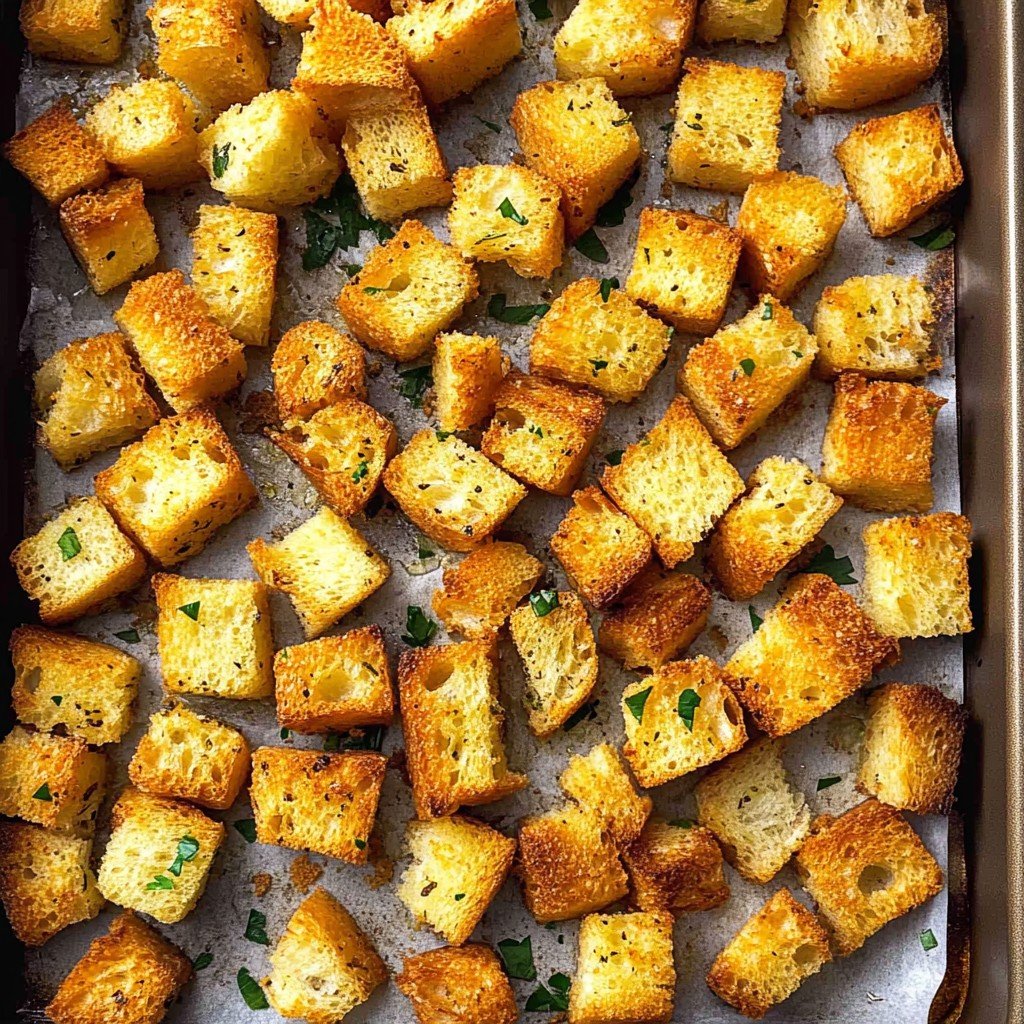
- Watch closely in the last few minutes to prevent burning. Croutons are ready when golden brown and crisp.
- Remove from the oven and let them cool completely on the baking sheet. They will continue to crisp up as they cool.
- Once fully cooled, serve immediately or store in an airtight container for up to one week.
Nutritional Information
Easy homemade croutons can be both a delectable indulgence and a nutritional addition to your meal, especially when you control the ingredients used.
A standard serving size, such as 1/2 cup (about 30 grams), made with olive oil and without added cheese, contains roughly 100 to 120 calories, 4-5 grams of fat, 16 grams of carbohydrates, and 2 grams of protein.
The actual values will slightly vary depending on your choice of bread, the amount of oil or butter, and whether you choose to add optional ingredients like Parmesan cheese.
By opting for whole grain or multigrain bread, you can increase the dietary fiber content, making the croutons more filling and heart-healthy. Olive oil not only imparts a rich flavor but also adds beneficial unsaturated fats to the mix.
Sodium levels will remain moderate if you are mindful of the added salt, but those watching their intake should consider reduced-sodium versions of seasonings. Croutons are generally low in sugar but provide energy in the form of complex carbohydrates.
While they are not a significant source of vitamins or minerals by themselves, combining them with nutrient-rich salads and soups creates a balanced meal. Homemade croutons can be easily adjusted to accommodate dietary restrictions, allergen concerns, or particular health goals by changing up the bread, oil, or seasonings.
Overall, easy homemade croutons, when eaten in moderation, can be a tasty way to add texture and satisfaction to nutritious dishes.
Wine and Beverage Pairings
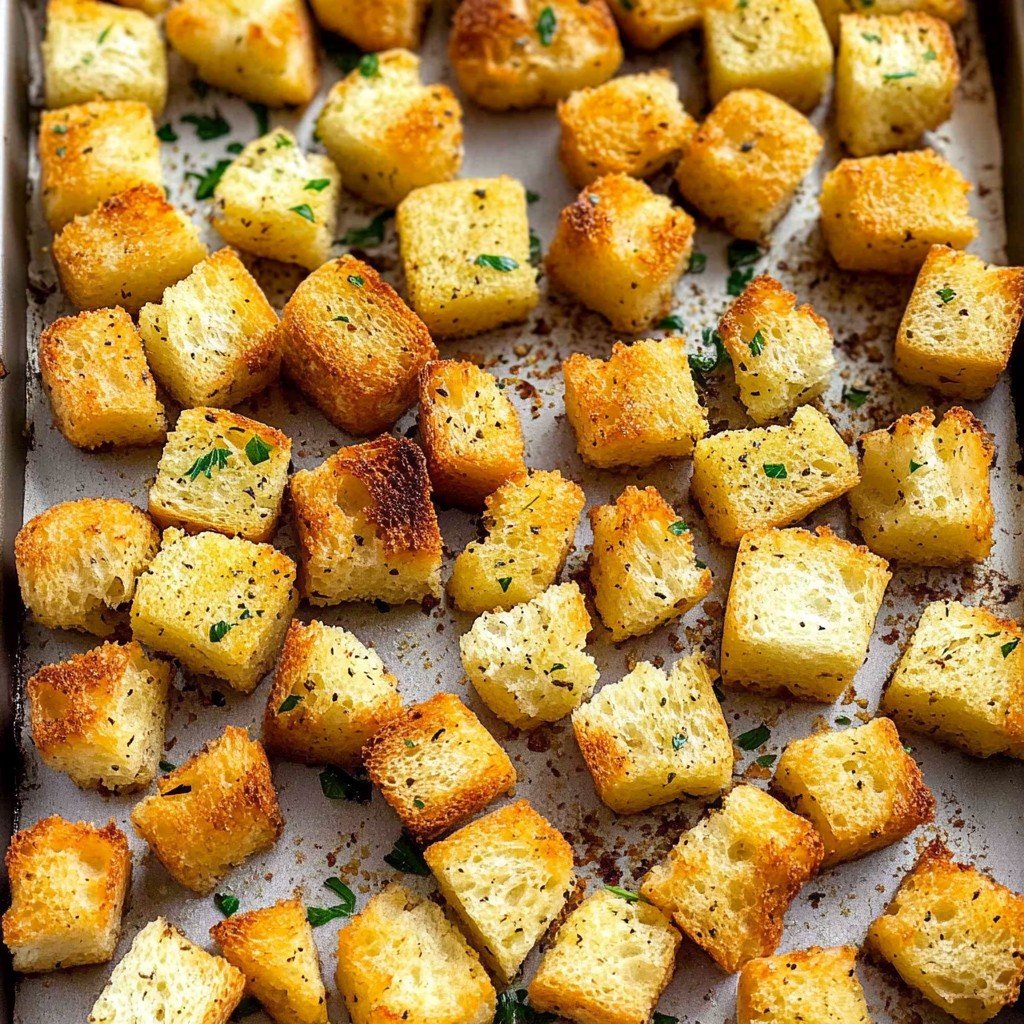
To complement the rich, savory flavors of easy homemade croutons, serve them alongside refreshing beverages like a crisp Sauvignon Blanc or a light Pinot Grigio, which pair beautifully with salads tossed with vinaigrette. For non-alcoholic options, try sparkling water with a twist of lemon or a light herbal iced tea.
When served with creamy soups like tomato or potato leek, a medium-bodied Chardonnay enhances the flavors. For an earthy pairing, a malty amber ale or wheat beer works well with herb-seasoned croutons.
Whether enjoyed as a snack or an accompaniment, choose beverages that balance the savory, crunchy profile of the croutons without overwhelming their subtle herbs and spices.
Cooking Tips and Variations
For the best easy homemade croutons, start with slightly stale, hearty bread, as fresh bread tends to become soggy and may not achieve the optimal crunch. Rye, sourdough, and rustic country loaves work exceptionally well. Cutting the bread into uniform cubes ensures even cooking and a consistent texture.
It’s important to toss the bread cubes thoroughly with oil and seasonings, making sure all sides are coated. If you’re after extra flavor, rub a peeled garlic clove on the bread before cutting it or infuse the oil with minced garlic for a deeper aroma.
For a gluten-free variation, use your favorite gluten-free bread and follow the same steps. Add freshly chopped herbs such as rosemary, thyme, or parsley for a burst of freshness, or sprinkle in some grated hard cheese for added richness.
If you prefer a more decadent crouton, substitute part of the olive oil with melted butter. For a different cooking method, try toasting the bread cubes in a large skillet over medium-low heat, stirring frequently, until golden and crispy.
To make sweet croutons, swap out garlic and herbs for cinnamon, a little sugar, and toss over fruit salads or yogurt. Always allow croutons to cool completely before storing to preserve their crunch, and store them in an airtight container away from moisture.
Homemade croutons are highly customizable, allowing you to tweak the seasoning to match any flavor profile or dietary need.
Serving Suggestions
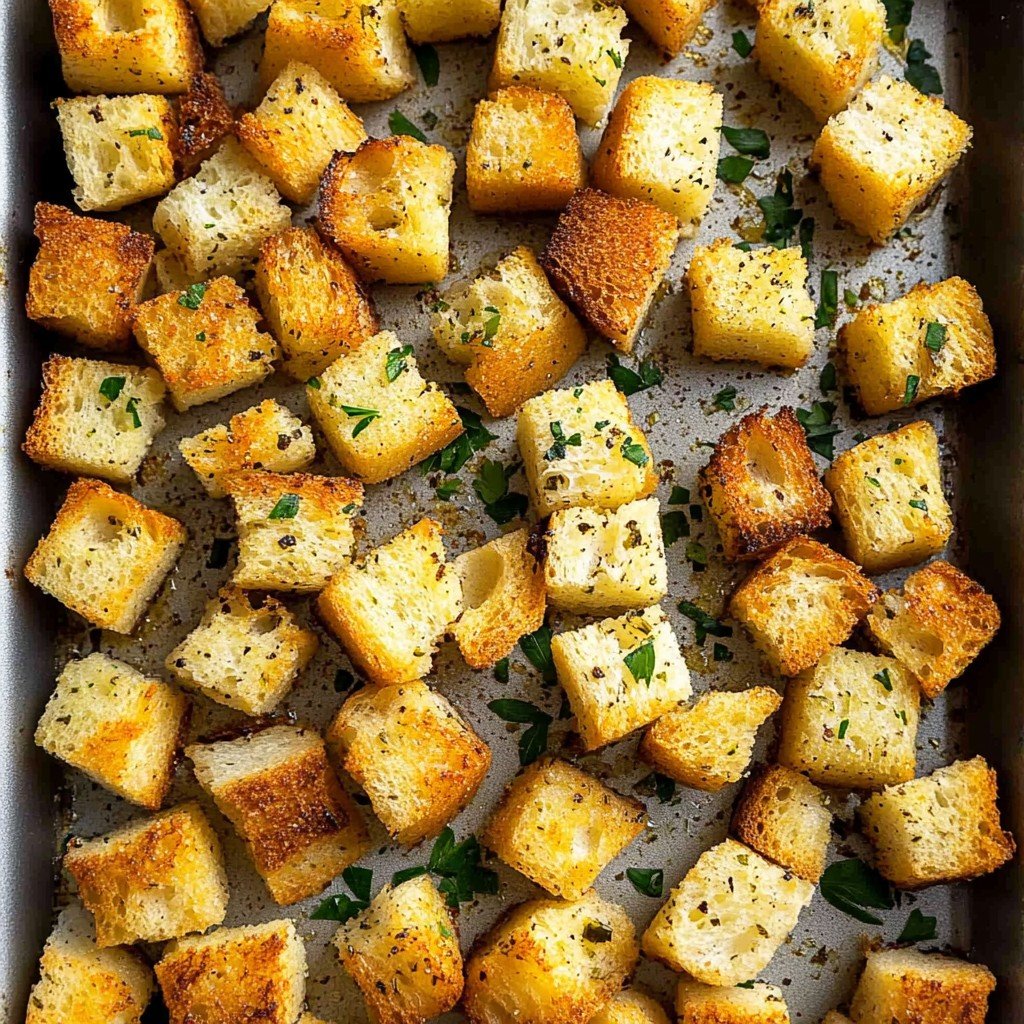
Easy homemade croutons are remarkably versatile when it comes to serving. They are the perfect topping for a classic Caesar salad, adding a necessary crispness that lifts the entire dish. Toss a handful into mixed green salads for added texture and a burst of flavor.
Croutons also make wonderful garnishes for creamy soups such as butternut squash, tomato basil, or French onion soup, where their crunch provides a delightful contrast to the silky base. For an elevated appetizer, arrange homemade croutons alongside dips like hummus, spinach artichoke, or whipped feta cheese.
As a charming variation, use seasoned croutons to top baked macaroni and cheese, adding an unexpected crunchy crust. Present croutons as a snack on their own, perhaps with a blend of your favorite spices for a savory treat at parties or gatherings.
For breakfast, try tossing sweet cinnamon croutons over fruit salad or yogurt parfaits. At brunch, offer small bowls of croutons as a topping bar with different herbs, cheeses, and spices so guests can personalize their salads and soups.
No matter how you choose to serve them, easy homemade croutons are guaranteed to enhance any meal, providing taste, texture, and a bit of homemade charm.
Health Benefits
Homemade croutons offer several health advantages, especially compared to pre-packaged, highly processed versions found in stores. By making easy homemade croutons, you control every ingredient that goes into your recipe, including the bread type, oil, and seasonings.
Choosing whole wheat or multigrain bread increases dietary fiber, supporting digestive health and helping maintain a feeling of fullness for longer periods. Using heart-healthy oils like extra virgin olive oil provides monounsaturated fats that may help reduce bad cholesterol levels and improve cardiovascular health.
By controlling the amount of added salt, you can keep sodium intake in check, making this a heart-friendly snack or salad topper. Croutons baked at home lack the preservatives and artificial flavors often found in commercial products. This means you get a fresh, wholesome addition to your meals.
For those with dietary restrictions or allergies, making croutons from scratch allows you to omit allergens such as dairy or gluten as needed. While croutons are primarily a source of carbohydrates, serving them with a nutrient-dense salad or soup can balance your nutritional intake and encourage more vegetable consumption.
In moderation, easy homemade croutons can be part of a nutritious diet, adding enjoyment and variety without compromising health goals.
Frequently Asked Questions
Yes, but slightly stale or day-old bread is preferred because it absorbs oil and seasonings better, resulting in crispier croutons. If using fresh bread, lightly toast it in the oven for a few minutes to dry it out before proceeding with the recipe.
Allow your croutons to cool completely and store them in an airtight container at room temperature for up to one week. Ensure the container stays dry and avoid refrigeration, which can introduce moisture and soften the croutons.
Absolutely! Once cooled completely, transfer croutons to a freezer-safe bag or container. They can be frozen for up to 2 months. Re-crisp by baking in a 350°F (180°C) oven for a few minutes before serving.
Yes. Simply substitute regular bread with gluten-free bread of your choice and follow the same seasoning and baking instructions. The result will be delicious, gluten-free croutons suitable for those with gluten sensitivities.
You can tailor the seasoning to suit your preferences. A classic mix includes garlic powder, dried herbs, salt, and pepper, but feel free to get creative with spices, freshly grated cheese, or a sprinkle of chili flakes for extra heat.
Making easy homemade croutons is a quick and rewarding process that transforms leftover bread into a flavorful, crunchy topping for any meal. The beauty of homemade croutons lies in their customizability: with endless possibilities for bread types, seasonings, and finishes, you can create croutons to suit any taste or dietary preference. Not only do they add an appealing crunch and burst of flavor to salads, soups, and more, but they also help reduce food waste in the kitchen. By following the simple steps and expert tips provided, you’ll be able to prepare perfectly crispy, golden-brown croutons every time. Try this easy homemade croutons recipe for your next meal and discover just how delicious and versatile they can be.
Ingredients
- 4 cups day-old bread (French, Italian, sourdough, or any hearty bread), cut into ½-inch cubes
- 3 tablespoons extra virgin olive oil or melted unsalted butter
- 1 teaspoon garlic powder
- 1 teaspoon dried Italian herbs (oregano, basil, or thyme)
- ½ teaspoon salt
- ¼ teaspoon freshly ground black pepper
- Optional: ¼ cup finely grated Parmesan cheese
- Optional: pinch of smoked paprika or cayenne for extra flavor
Instructions
-
1Preheat your oven to 375°F (190°C) and line a large baking sheet with parchment paper for easy cleanup.
-
2Place the bread cubes in a large bowl. Drizzle the olive oil or melted butter evenly over the cubes.
-
3Sprinkle the garlic powder, dried Italian herbs, salt, and black pepper over the bread.
-
4If using, add the Parmesan cheese and additional spices such as smoked paprika or cayenne for extra zest.
-
5Toss the bread cubes gently but thoroughly so each piece is evenly coated with the oil and seasonings.
-
6Spread the seasoned bread cubes in a single layer on the prepared baking sheet, ensuring they are not overcrowded.
-
7Bake in the preheated oven for 12 to 18 minutes, stirring or flipping the croutons halfway through to ensure even browning.
-
8Watch closely in the last few minutes to prevent burning. Croutons are ready when golden brown and crisp.
-
9Remove from the oven and let them cool completely on the baking sheet. They will continue to crisp up as they cool.
-
10Once fully cooled, serve immediately or store in an airtight container for up to one week.
Approximate Information for One Serving
Nutrition Disclaimers
Number of total servings shown is approximate. Actual number of servings will depend on your preferred portion sizes.
Nutritional values shown are general guidelines and reflect information for 1 serving using the ingredients listed, not including any optional ingredients. Actual macros may vary slightly depending on specific brands and types of ingredients used.
To determine the weight of one serving, prepare the recipe as instructed. Weigh the finished recipe, then divide the weight of the finished recipe (not including the weight of the container the food is in) by the desired number of servings. Result will be the weight of one serving.
Did you make this recipe?
Please consider Pinning it!