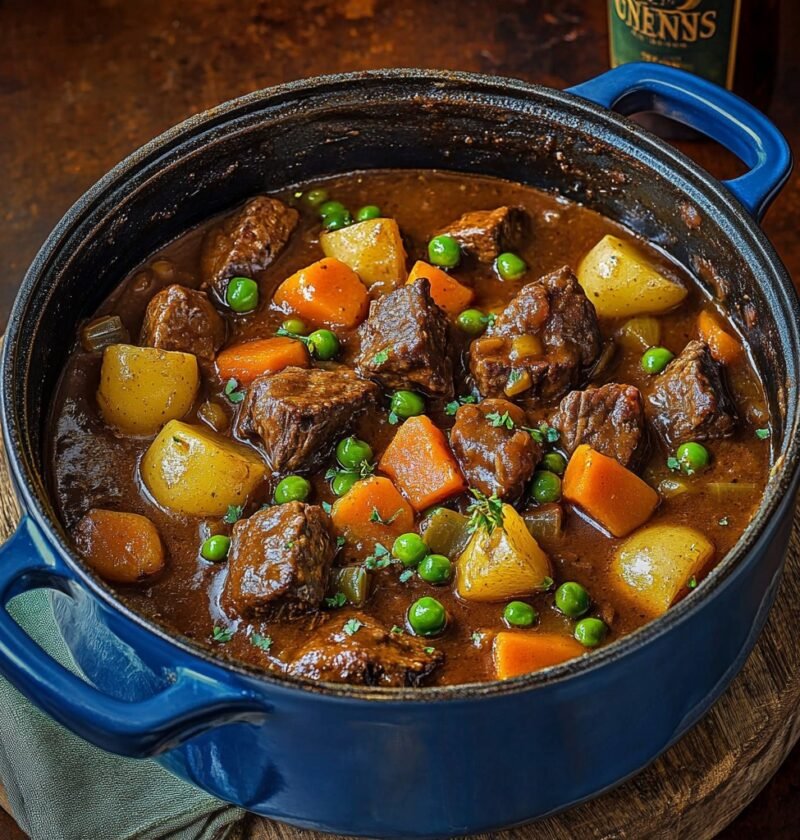
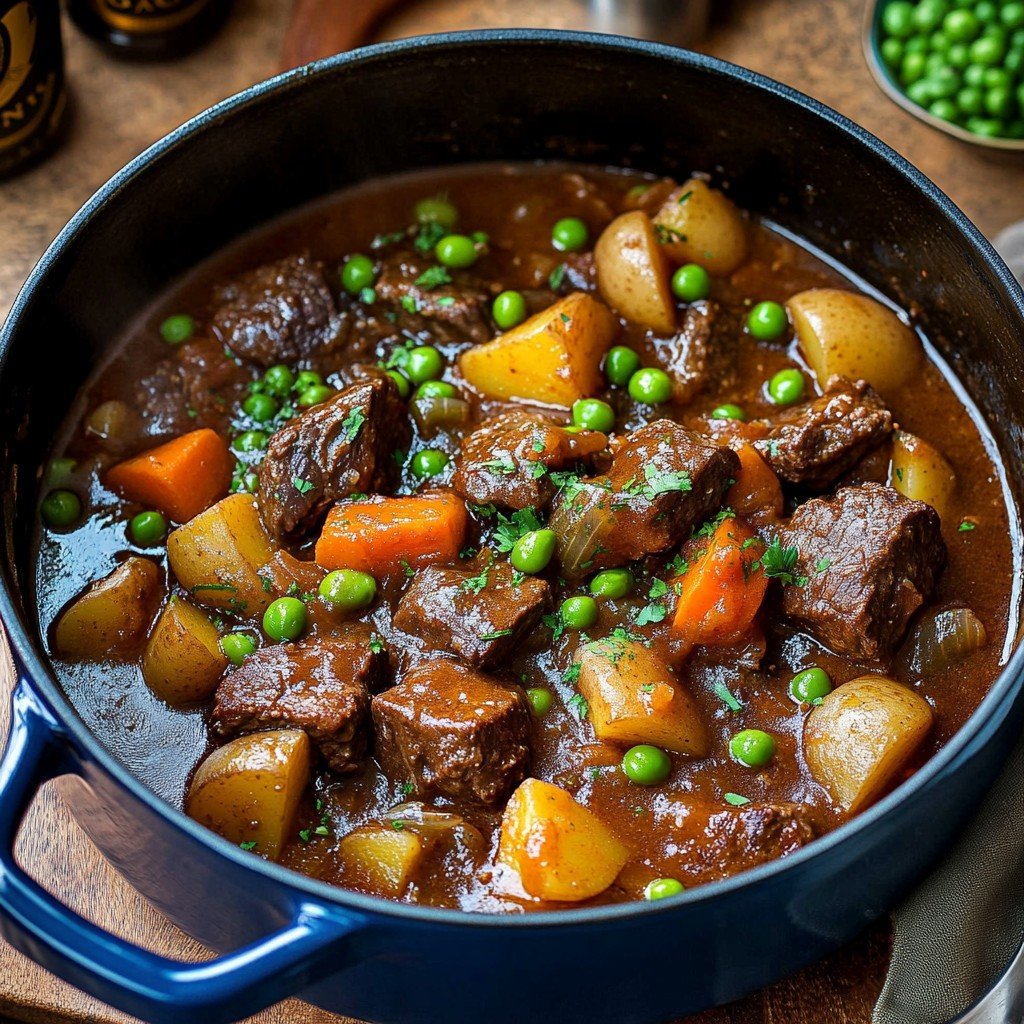
Guinness Beef Stew stands as a shining example of classic Irish comfort food, celebrated for its rich, robust flavors and heartwarming simplicity. This dish has woven itself into the tapestry of traditional Irish cuisine, often enjoyed during chilly evenings, festive gatherings, or St. Patrick’s Day celebrations.
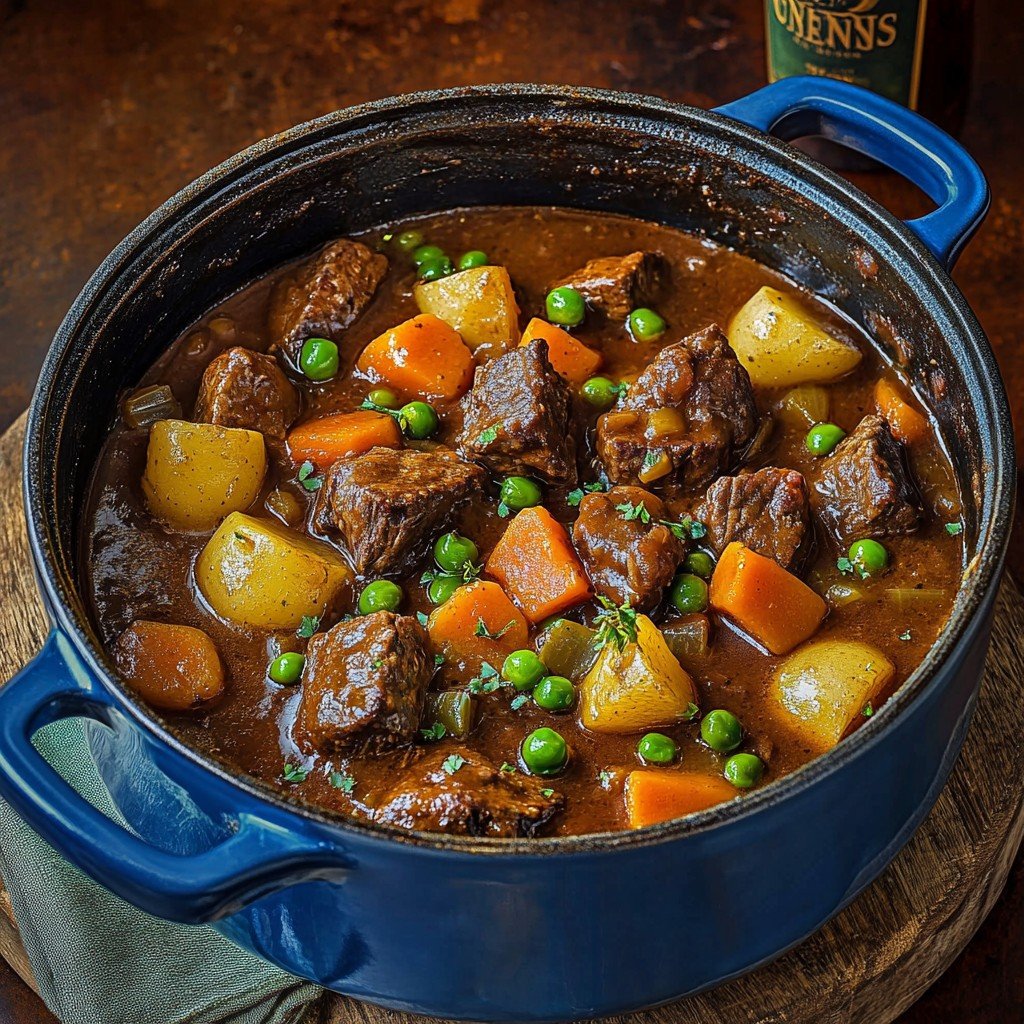
Rooted in Irish culinary heritage, the signature element that sets Guinness Beef Stew apart is, unsurprisingly, the addition of Guinness stout. This world-renowned Irish beer imparts a deep, malty complexity to the stew, enhancing the natural richness of slow-cooked beef and blending beautifully with aromatic vegetables and herbs.
Traditional Guinness Beef Stew recipes have been passed down through generations, reflecting the Irish penchant for slow-cooked dishes that nurture and sustain.
Families frequently made this stew with whatever cut of affordable beef was available, simmering it alongside earthy root vegetables, such as carrots and potatoes, and sometimes using parsnips or mushrooms for added depth. Over time, Guinness Beef Stew has become a sought-after comfort dish far beyond Ireland’s borders.
Its appeal lies in the tender chunks of beef bathed in a silky, savory sauce studded with wholesome vegetables, all enveloped by the unique undertone of Guinness stout. This stew is perfect for anyone seeking a soul-warming meal, whether you have Irish roots or simply crave classic, hearty flavors.
With its ease of preparation, forgiving technique, and unforgettable taste, Guinness Beef Stew is an excellent recipe for beginners and experienced home cooks alike.
Explore the steps below and learn how you can bring this iconic Irish dish to your family’s table, making it a cherished tradition in your own kitchen.
Ingredients
- 2.5 pounds beef chuck, cut into 1.5-inch cubes
- 3 tablespoons all-purpose flour
- 2 teaspoons salt, divided
- 1 teaspoon black pepper
- 3 tablespoons vegetable oil or olive oil
- 1 large onion, diced
- 3 cloves garlic, minced
- 3 large carrots, peeled and cut into 1-inch pieces
- 2 parsnips, peeled and sliced (optional)
- 2-3 celery stalks, chopped
- 2 tablespoons tomato paste
- 2 cups beef broth
- 1 (14.9-ounce) can or bottle Guinness stout
- 1 pound baby potatoes, halved
- 2 bay leaves
- 1 tablespoon fresh thyme leaves (or 1 teaspoon dried thyme)
- 1 teaspoon Worcestershire sauce
- 1 cup mushrooms, quartered (optional)
- Chopped fresh parsley for garnish
Instructions
- In a large mixing bowl, toss the beef cubes with flour, 1 teaspoon salt, and black pepper until evenly coated.
- Heat 2 tablespoons oil in a large Dutch oven or heavy-bottomed pot over medium-high heat. Working in batches, sear the beef cubes on all sides until browned, about 3-4 minutes per batch. Transfer browned beef to a plate and repeat until all pieces are browned, adding more oil as necessary.
- Reduce heat to medium. Add the diced onion and cook, stirring occasionally, until softened and translucent, about 5 minutes.
- Stir in the minced garlic and cook for 1 minute until fragrant.
- Add carrots, parsnips (if using), and celery to the pot. Sauté for another 5 minutes, allowing the vegetables to begin softening.
- Stir in tomato paste and cook for 2 minutes to caramelize.
- Pour in the Guinness stout, scraping the bottom of the pot to deglaze and release any browned bits from the beef.
- Add beef broth, halved baby potatoes, bay leaves, thyme, remaining 1 teaspoon salt, and Worcestershire sauce. If using mushrooms, add them now.
- Return the browned beef, along with any accumulated juices, to the pot. Stir everything to combine.
- Bring the stew to a gentle simmer. Cover and cook on low heat for 2 – 2.5 hours, stirring occasionally, until the beef is tender and the flavors have melded. Alternatively, transfer to a 325°F oven for the same duration.
- Taste and adjust seasoning with extra salt and pepper as needed. If you prefer a thicker stew, remove the lid for the final 20 minutes of cooking, allowing the sauce to reduce.
- Remove bay leaves. Garnish with chopped fresh parsley before serving. Serve hot, ideally with crusty bread for dipping.
Nutritional Information
Guinness Beef Stew offers a nourishing, balanced meal full of protein, fiber, vitamins, and minerals. A typical serving of this stew (about 1.5 cups) contains approximately 400-500 calories, depending on your choice of beef cut and additional ingredients. The high-quality protein from beef supports muscle health and energy.
Carrots, parsnips, and potatoes supply a wealth of dietary fiber that supports digestion, along with valuable nutrients like vitamin A, vitamin C, potassium, and folate. The Guinness stout not only provides a distinctive malty undertone but also contributes trace micronutrients from the roasted barley.
This stew uses a modest amount of oil and omits cream or butter, keeping saturated fats in check. If you prefer, you can use a leaner cut of beef to further reduce total fat content. The slow-cooking method allows flavors to deepen naturally, minimizing the need for added salt.
When enjoyed as part of a balanced diet, Guinness Beef Stew can be both hearty and wholesome, warming you up while delivering an array of essential nutrients. For those watching their sodium intake, using low-sodium beef broth and moderating added salt provides a delicious, lower-sodium version of the classic.
Swap in extra vegetables for added nutrients and fiber, tailoring this stew to meet various dietary goals without sacrificing its signature, soul-satisfying taste.
Wine and Beverage Pairings
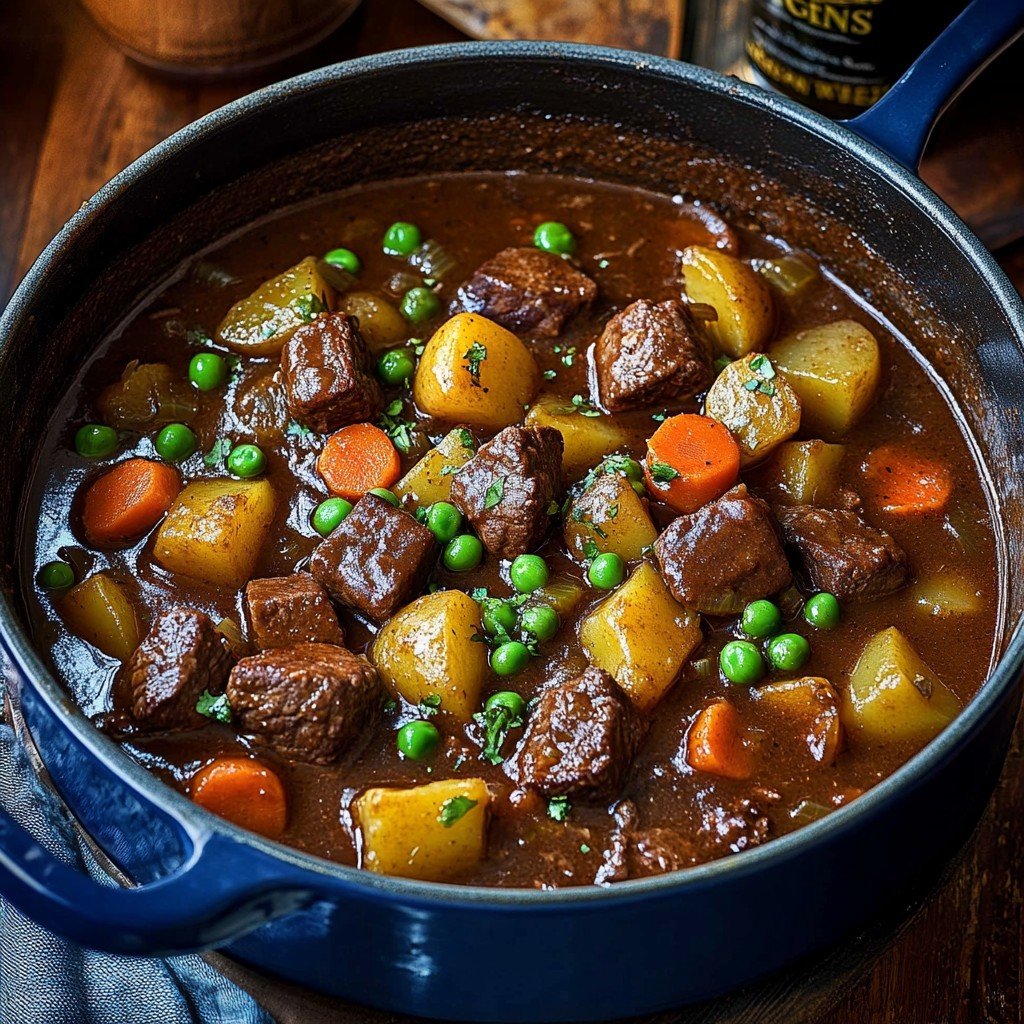
Guinness Beef Stew pairs beautifully with Irish stout—naturally, a fresh pint of Guinness is the top choice, echoing the signature flavors of the dish. If you prefer wine, opt for a robust red such as a Cabernet Sauvignon or Malbec, which complements the stew’s richness and hearty texture.
For a lighter accompaniment, a traditional hard cider provides a refreshing, lightly sweet contrast. Non-alcoholic options such as a malty root beer or rich, black tea can also enhance the meal’s comforting vibe, offering depth and warmth to each bite.
A classic Irish soda bread on the side ties together the meal’s rustic charm.
Cooking Tips and Variations
To ensure your Guinness Beef Stew is rich and satisfying, start by choosing the right cut of beef—chuck roast is ideal, thanks to its fat marbling and ability to become incredibly tender when slow-cooked.
If you require a leaner option, opt for beef round, but remember it may not be as succulent. Always take the time to properly brown the meat; this step enhances flavor and adds depth to the stew.
Sautéing tomato paste until it caramelizes brings out its natural sweetness, balancing the bitterness of the Guinness stout. Don’t be afraid to experiment: root vegetables like turnips or rutabaga, and earthy mushrooms, add further complexity to the stew.
For a gluten-free variation, substitute all-purpose flour with a gluten-free blend or cornstarch. For even more pronounced Guinness flavor, let the stew rest overnight in the refrigerator—the tastes will meld, becoming more harmonious.
Finally, if you crave a thicker sauce, uncover the stew for the final 20 minutes to let it reduce naturally, or whisk in a slurry of flour and water.
This recipe is also perfect for slow cookers; just sear the beef and sauté the vegetables before transferring all ingredients to the cooker, then cook on low for 7-8 hours.
No matter your variation, the key to an exceptional Guinness Beef Stew is patience—low and slow cooking ensures fork-tender beef and a deeply flavorful broth.
Serving Suggestions
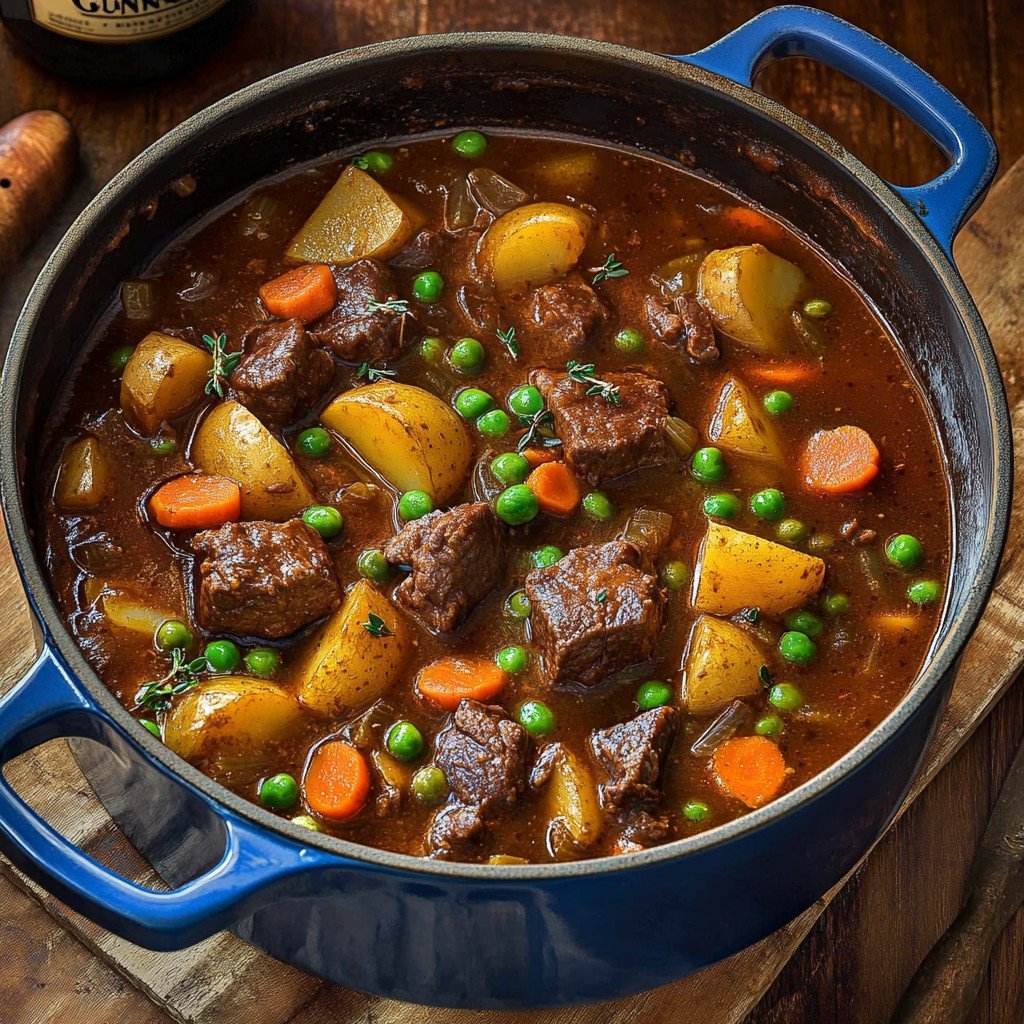
Guinness Beef Stew is at its best when served piping hot, ladled generously into deep bowls that can capture all the delicious, savory broth. Garnish each portion with a sprinkling of fresh parsley for color and freshness.
For a classic Irish experience, serve the stew alongside thick slices of rustic bread or traditional Irish soda bread—ideal for soaking up every drop of the flavorful sauce. Warm, crusty baguette or buttered dinner rolls also work perfectly.
This stew makes a hearty main course and stands beautifully on its own, but you can also round out your meal with a crisp green salad dressed simply with lemon and olive oil, or a side of steamed green beans or peas.
To create a festive atmosphere, consider serving it as part of an Irish feast, possibly followed by a light dessert such as apple crumble or bread pudding.
Guinness Beef Stew is an excellent choice for casual dinners, family gatherings, or holiday celebrations, reliably pleasing a crowd and encouraging guests to return for seconds.
Leftovers taste even better the next day as the flavors intensify, so make a large batch to ensure you have enough for easy, delicious lunches.
Whether you’re celebrating St. Patrick’s Day or simply seeking a comforting meal, this stew invites everyone to gather round and enjoy a nourishing, memorable dining experience.
Health Benefits
Guinness Beef Stew is not only satisfying but can also be part of a balanced, health-conscious diet. The stew is loaded with lean protein from beef, which is crucial for building and repairing tissues.
The abundance of root vegetables—carrots, potatoes, parsnips—provides a wealth of antioxidants, vitamins, and dietary fiber, supporting healthy digestion and overall wellness. Guinness stout, in moderation, adds unique flavor and trace minerals such as iron from roasted barley.
Opting for low-sodium beef broth and moderating added salt helps manage sodium intake, supporting heart health. Using olive oil in place of vegetable oil adds heart-healthy monounsaturated fats. Because the stew is slow-cooked, it uses less fat than pan-fried or roasted meats.
The stew is naturally free from processed foods and artificial additives, making it a wholesome choice for family meals. For an even healthier version, add more vegetables such as leeks, kale, or mushrooms, or use a leaner cut of beef to lower saturated fat content.
Portion control is simple, as the stew is both filling and nutrient-dense, making it easier to enjoy a satisfying meal without overindulging. Overall, Guinness Beef Stew makes it easy to enjoy a comfort meal that's not just delicious but also provides lasting, balanced energy.
Frequently Asked Questions
Absolutely. Guinness Beef Stew tastes even better after a night in the refrigerator as the flavors meld. Simply reheat gently on the stovetop or in the microwave before serving.
Yes, this stew freezes beautifully. Let it cool completely, then store it in airtight containers for up to 3 months. Thaw overnight in the refrigerator, then reheat on the stove.
For the signature Guinness Beef Stew flavor, Guinness stout is ideal, but another dry Irish stout or a robust porter can be substituted. Avoid light or hoppy beers, as they can make the stew bitter.
Yes. Use gluten-free flour to coat the beef, and check that your Worcestershire sauce and Guinness are gluten-free (as some varieties contain barley).
You can add turnips, sweet potatoes, leeks, or mushrooms to the stew. Adjust the cooking time so all vegetables become tender but not mushy.
Guinness Beef Stew stands tall among the most beloved comfort foods, capturing the rustic charm and robust flavors of Ireland in a single, hearty dish. With its tender chunks of beef, aromatic blend of vegetables and herbs, and signature malt notes from Guinness stout, this stew is not just filling but truly memorable. Whether you’re preparing it for St. Patrick’s Day, a cozy family dinner, or simply to enjoy the timeless taste of traditional Irish cooking, this recipe promises warmth, nourishment, and satisfaction. Its versatility, ease of preparation, and ability to improve with time make it a must-have in every home cook’s rotation. Gather your friends and family, share stories around the table, and savor the true taste of Ireland by indulging in a classic Guinness Beef Stew.
Ingredients
- 2.5 pounds beef chuck, cut into 1.5-inch cubes
- 3 tablespoons all-purpose flour
- 2 teaspoons salt, divided
- 1 teaspoon black pepper
- 3 tablespoons vegetable oil or olive oil
- 1 large onion, diced
- 3 cloves garlic, minced
- 3 large carrots, peeled and cut into 1-inch pieces
- 2 parsnips, peeled and sliced (optional)
- 2-3 celery stalks, chopped
- 2 tablespoons tomato paste
- 2 cups beef broth
- 1 (14.9-ounce) can or bottle Guinness stout
- 1 pound baby potatoes, halved
- 2 bay leaves
- 1 tablespoon fresh thyme leaves (or 1 teaspoon dried thyme)
- 1 teaspoon Worcestershire sauce
- 1 cup mushrooms, quartered (optional)
- Chopped fresh parsley for garnish
Instructions
-
1In a large mixing bowl, toss the beef cubes with flour, 1 teaspoon salt, and black pepper until evenly coated.
-
2Heat 2 tablespoons oil in a large Dutch oven or heavy-bottomed pot over medium-high heat. Working in batches, sear the beef cubes on all sides until browned, about 3-4 minutes per batch. Transfer browned beef to a plate and repeat until all pieces are browned, adding more oil as necessary.
-
3Reduce heat to medium. Add the diced onion and cook, stirring occasionally, until softened and translucent, about 5 minutes.
-
4Stir in the minced garlic and cook for 1 minute until fragrant.
-
5Add carrots, parsnips (if using), and celery to the pot. Sauté for another 5 minutes, allowing the vegetables to begin softening.
-
6Stir in tomato paste and cook for 2 minutes to caramelize.
-
7Pour in the Guinness stout, scraping the bottom of the pot to deglaze and release any browned bits from the beef.
-
8Add beef broth, halved baby potatoes, bay leaves, thyme, remaining 1 teaspoon salt, and Worcestershire sauce. If using mushrooms, add them now.
-
9Return the browned beef, along with any accumulated juices, to the pot. Stir everything to combine.
-
10Bring the stew to a gentle simmer. Cover and cook on low heat for 2 – 2.5 hours, stirring occasionally, until the beef is tender and the flavors have melded. Alternatively, transfer to a 325°F oven for the same duration.
-
11Taste and adjust seasoning with extra salt and pepper as needed. If you prefer a thicker stew, remove the lid for the final 20 minutes of cooking, allowing the sauce to reduce.
-
12Remove bay leaves. Garnish with chopped fresh parsley before serving. Serve hot, ideally with crusty bread for dipping.
Approximate Information for One Serving
Nutrition Disclaimers
Number of total servings shown is approximate. Actual number of servings will depend on your preferred portion sizes.
Nutritional values shown are general guidelines and reflect information for 1 serving using the ingredients listed, not including any optional ingredients. Actual macros may vary slightly depending on specific brands and types of ingredients used.
To determine the weight of one serving, prepare the recipe as instructed. Weigh the finished recipe, then divide the weight of the finished recipe (not including the weight of the container the food is in) by the desired number of servings. Result will be the weight of one serving.
Did you make this recipe?
Please consider Pinning it!