Homemade French Onion Soup stands as one of the most celebrated comfort foods in French cuisine. It is loved for its deep, savory flavors, irresistible aroma, and the unique combination of caramelized onions, crusty bread, and melted cheese bubbling on top.

This hearty soup has humble origins, dating back to the 18th century in France, where it was considered food for the common people due to the wide availability and low cost of onions. Over time, its delicious, rich profile elevated it to the ranks of haute cuisine.
When searching for a classic warm appetizer or a satisfying dinner, homemade French Onion Soup consistently tops the list.
The keyphrase "Homemade French Onion Soup" resonates not only with food enthusiasts looking to recreate the authentic taste of France in their kitchens but also with anyone in search of a soul-warming meal perfect for chilly days.
This recipe is designed to share the timeless magic of slow-cooked onions, robust beef broth, and perfectly toasted bread topped with gooey cheese, transforming humble ingredients into a gourmet dining experience.
Whether you are new to making soup from scratch or a seasoned cook perfecting your favorite recipes, this guide unveils the secrets to achieving that bistro-quality finish right at home.
Ingredients
- 6 large yellow onions, thinly sliced
- 4 tablespoons unsalted butter
- 2 tablespoons olive oil
- 1 teaspoon salt
- 1 teaspoon sugar
- 1/4 cup dry white wine
- 8 cups beef broth (preferably low sodium)
- 2 cups chicken broth
- 2 sprigs fresh thyme (or 1/2 teaspoon dried thyme)
- 2 bay leaves
- 1 tablespoon all-purpose flour
- 1/2 teaspoon black pepper
- 1 baguette, sliced
- 2 cups grated Gruyère cheese
- 1/2 cup grated Parmesan cheese
- Fresh chives or parsley for garnish (optional)
Instructions
- Melt the butter and olive oil in a large heavy-bottomed pot or Dutch oven over medium heat.
- Add the thinly sliced onions, salt, and sugar. Stir well to coat the onions with the fat.
- Cook the onions over medium to medium-low heat, stirring occasionally, until they caramelize to a rich golden-brown color. This should take about 40-50 minutes. Scrape up the brown bits frequently to prevent burning.
- Sprinkle the flour over the caramelized onions and cook for 2-3 minutes, stirring constantly, to eliminate the raw taste of flour.
- Pour in the white wine to deglaze the pot, scraping up any browned bits on the bottom for added flavor.
- Add the beef broth, chicken broth, thyme, and bay leaves. Stir to combine.
- Bring the soup to a gentle simmer. Cook uncovered for 30-40 minutes, allowing the flavors to meld together.
- Remove the thyme stems and bay leaves. Season with black pepper and adjust salt to taste.
- Meanwhile, preheat your oven to 400°F (200°C). Arrange the baguette slices on a baking sheet and toast them in the oven for 5-7 minutes until golden.
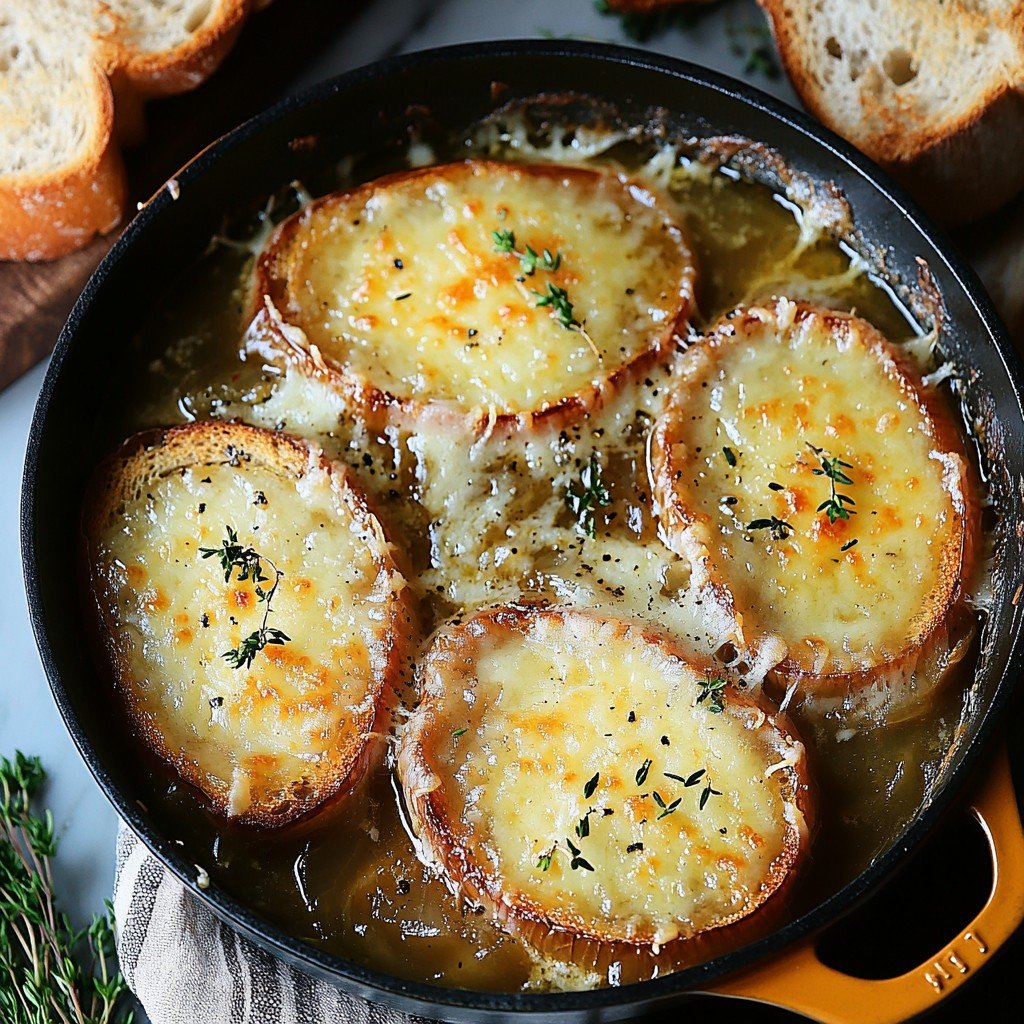
- Ladle the hot soup into oven-safe bowls. Float a slice or two of toasted baguette on each serving and sprinkle generously with Gruyère and Parmesan cheese.
- Place the bowls under the broiler for 2-3 minutes, watching closely, until the cheese is melted and bubbly with a golden-brown top.
- Garnish with fresh chives or parsley if desired and serve immediately while hot.
Nutritional Information
Homemade French Onion Soup is not only renowned for its flavor but also offers a mix of nutrients from its whole ingredients. A serving of this soup typically contains around 350 calories when topped with cheese and bread.
The onions provide ample dietary fiber, vitamin C, and antioxidants such as quercetin, which help support overall health. Beef and chicken broths contribute a modest amount of protein and important minerals like iron and potassium.
The Gruyère and Parmesan cheeses deliver calcium, protein, and healthy fats, but also contribute saturated fat and sodium, so moderation is key for those watching these intake values. The inclusion of hearty bread adds carbohydrates that can provide energy, while using whole grain versions can improve the fiber content.
If you choose reduced-sodium broth and moderate the amount of cheese, this soup can easily fit into many balanced diets. For those with lactose intolerance or dietary restrictions, non-dairy cheese alternatives and gluten-free bread make suitable adjustments.
With a mindful approach to portioning, homemade French Onion Soup maintains a good balance between indulgence and nutrition, making it a flavorful starter or even a complete meal when paired with a fresh salad.

Wine and Beverage Pairings
French Onion Soup pairs beautifully with robust beverages that can complement its deep, savory profile.
For wine lovers, a dry white wine such as Sauvignon Blanc or Chardonnay balances the soup's richness, while a light-bodied red wine like Pinot Noir offers just enough acidity and fruitiness to harmonize with the caramelized onions.
Beer enthusiasts might enjoy a Belgian ale or a malty brown ale, which echo the soup's earthy flavors without overpowering them. Non-alcoholic options include tart, sparkling apple cider or a subtly flavored herbal tea such as thyme or sage, providing a refreshing counterpoint to the soup's savory, cheesy topping.
Cooking Tips and Variations
Achieving the signature taste of homemade French Onion Soup relies on patience and attention to detail. Always allow onions to caramelize slowly over medium to low heat; rushing this process may burn them and develop bitter flavors.
Stir often, scraping down any brown bits on the pot bottom, as these contribute intense savoriness. For a richer broth, use homemade beef or chicken stock, or opt for low-sodium varieties to control salt levels. Try experimenting with mixing yellow, sweet, and red onions for a complex flavor profile.
When selecting cheese, Gruyère is both traditional and meltingly perfect, but Emmental, Swiss, or even sharp provolone can provide interesting alternatives. For vegetarians, substitute beef broth with a robust mushroom broth; the umami will mimic the rich flavors typically found in traditional recipes.
Gluten-free diners can use their favorite gluten-free baguette. Adding a splash of sherry or cognac after deglazing with wine enhances the soup's depth. Toasting the bread slices until crisp ensures they won't become too soggy under the cheese.
And finally, investing in sturdy, oven-proof soup bowls ensures the cheese is properly bubbled and browned without risk.
Serving Suggestions
Serve homemade French Onion Soup hot and fresh from the oven, topped with bubbly, golden cheese. Use traditional, thick-walled ceramic bowls to retain heat and keep the soup warm as you enjoy it.
For a classic presentation, place the bowl on a plate with a napkin underneath to catch any drips of melted cheese. Offer additional slices of toasted baguette on the side for dipping, adding extra sustenance and texture.
This soup makes a wonderful starter to an elegant multi-course meal, especially when followed by simple salads, roasted meats, or quiche. For a lighter meal, serve with a crisp mixed greens salad tossed in a light vinaigrette to cut through the richness.
Garnish each bowl with a sprinkle of freshly chopped chives or parsley for vibrant color and a delicate fresh note. Whether for an intimate dinner or a festive gathering with friends, this homemade French Onion Soup will always impress guests and satisfy appetites.
Health Benefits
Homemade French Onion Soup offers several health benefits due to its wholesome ingredients. Onions, the star of the dish, are packed with antioxidants such as quercetin that may help reduce inflammation and support heart health.
They also provide vitamin C, beneficial for immune function, and are a notable source of dietary fiber, which aids digestion and supports gut health.
The use of quality beef and chicken broth adds comforting warmth and supplies important minerals, while the cheese contributes essential protein and calcium for strong bones and muscles. By using moderate amounts of salt and opting for low-sodium broth, you can control sodium content without compromising flavor.
Whole grain bread can increase the fiber and nutrient content, supporting sustained energy levels. Additionally, this recipe can be easily adapted to fit vegetarian, gluten-free, or lactose-intolerant dietary needs, making it a versatile and health-conscious option for many households.
As with all recipes topped with cheese and bread, those watching their saturated fat and calorie intake should enjoy homemade French Onion Soup in moderation as part of a balanced diet.

Frequently Asked Questions
Yes, the soup base can be prepared a day or two in advance and stored in the refrigerator. Simply reheat, add the toasted bread and cheese, then broil just before serving for the fresh, bubbly top.
Yellow onions are traditional and provide the right balance of sweetness and depth, but feel free to mix in sweet or red onions for a more complex flavor profile.
The soup base freezes well. Cool completely before transferring to an airtight container. Freeze for up to 3 months, then defrost, heat, and assemble with fresh bread and cheese when ready to serve.
Gruyère is recommended for its melting quality and nutty flavor, but Swiss, Emmental, or even sharp provolone can be used. For a milder taste, try mozzarella mixed with a bit of Parmesan.
The classic recipe uses wheat baguette, but gluten-free bread can be substituted. Also, ensure the broth and other ingredients are labeled gluten-free.
Homemade French Onion Soup remains an enduring favorite, cherished for its rich, complex flavor and comforting, rustic appeal. Mastering this classic dish not only fills your home with irresistible aromas but creates memorable moments as loved ones gather around the table. With a handful of pantry staples, a bit of patience, and the right techniques, anyone can recreate this soup’s authentic French bistro magic. Whether enjoyed as a simple weeknight dinner or served to impress at special gatherings, this homemade French Onion Soup recipe stands the test of time. Enjoy every spoonful and savor the culinary journey it brings to your table.
Ingredients
- 6 large yellow onions, thinly sliced
- 4 tablespoons unsalted butter
- 2 tablespoons olive oil
- 1 teaspoon salt
- 1 teaspoon sugar
- 1/4 cup dry white wine
- 8 cups beef broth (preferably low sodium)
- 2 cups chicken broth
- 2 sprigs fresh thyme (or 1/2 teaspoon dried thyme)
- 2 bay leaves
- 1 tablespoon all-purpose flour
- 1/2 teaspoon black pepper
- 1 baguette, sliced
- 2 cups grated Gruyère cheese
- 1/2 cup grated Parmesan cheese
- Fresh chives or parsley for garnish (optional)
Instructions
-
1Melt the butter and olive oil in a large heavy-bottomed pot or Dutch oven over medium heat.
-
2Add the thinly sliced onions, salt, and sugar. Stir well to coat the onions with the fat.
-
3Cook the onions over medium to medium-low heat, stirring occasionally, until they caramelize to a rich golden-brown color. This should take about 40-50 minutes. Scrape up the brown bits frequently to prevent burning.
-
4Sprinkle the flour over the caramelized onions and cook for 2-3 minutes, stirring constantly, to eliminate the raw taste of flour.
-
5Pour in the white wine to deglaze the pot, scraping up any browned bits on the bottom for added flavor.
-
6Add the beef broth, chicken broth, thyme, and bay leaves. Stir to combine.
-
7Bring the soup to a gentle simmer. Cook uncovered for 30-40 minutes, allowing the flavors to meld together.
-
8Remove the thyme stems and bay leaves. Season with black pepper and adjust salt to taste.
-
9Meanwhile, preheat your oven to 400°F (200°C). Arrange the baguette slices on a baking sheet and toast them in the oven for 5-7 minutes until golden.
-
10Ladle the hot soup into oven-safe bowls. Float a slice or two of toasted baguette on each serving and sprinkle generously with Gruyère and Parmesan cheese.
-
11Place the bowls under the broiler for 2-3 minutes, watching closely, until the cheese is melted and bubbly with a golden-brown top.
-
12Garnish with fresh chives or parsley if desired and serve immediately while hot.
Approximate Information for One Serving
Nutrition Disclaimers
Number of total servings shown is approximate. Actual number of servings will depend on your preferred portion sizes.
Nutritional values shown are general guidelines and reflect information for 1 serving using the ingredients listed, not including any optional ingredients. Actual macros may vary slightly depending on specific brands and types of ingredients used.
To determine the weight of one serving, prepare the recipe as instructed. Weigh the finished recipe, then divide the weight of the finished recipe (not including the weight of the container the food is in) by the desired number of servings. Result will be the weight of one serving.
Did you make this recipe?
Please consider Pinning it!